Biography & Career Overview
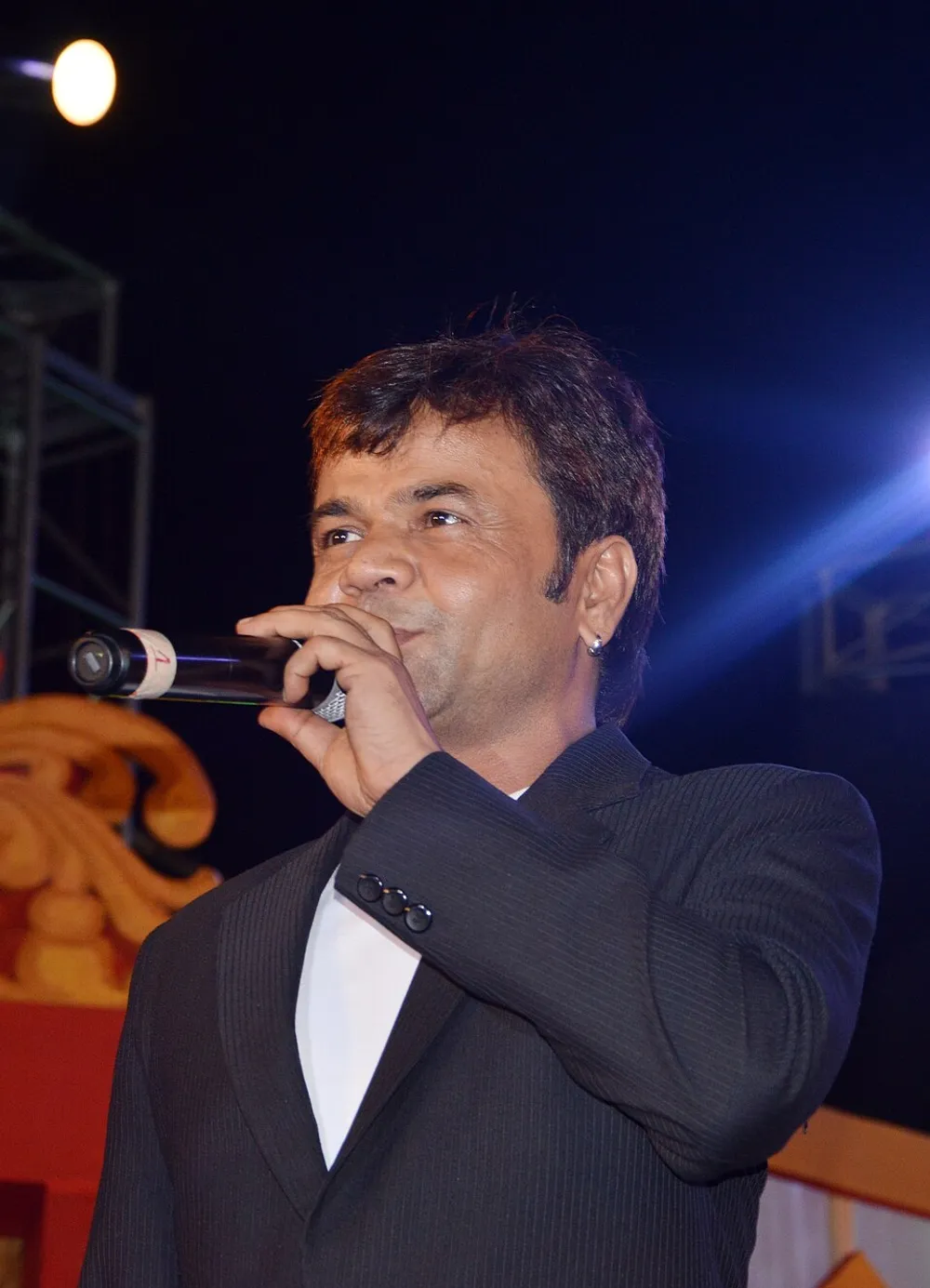
Rajpal Naurang Yadav, born on 16 March 1971 in Shahjahanpur, Uttar Pradesh, is one of the most recognisable comic actors in the history of Hindi cinema, the man whose lisp-stuttered, wheedling, instantly quotable characters carried some of the biggest comedy franchises of the 2000s, from Priyadarshan's masala farces to the Hera Pheri universe. What separates him from the lineup of Bollywood jesters is range: he burst onto the screen as a menacing negative character in Ram Gopal Varma's Jungle, spent two decades making full houses laugh in Hungama, Garam Masala, Bhool Bhulaiyaa and Krrish 3, and repeatedly chose serious, offbeat leading roles in films the industry would rather he had left alone. His career has also had a brutal second act: loans taken to finance his own directorial venture curdled into years of court cases, imprisonment in 2013 and 2018, and a six-month sentence in February 2026 that sent India's favourite funnyman to Tihar jail and triggered an outpouring of public sympathy (including a job offer from actor Sonu Sood) that said more about his place in the national heart than any box-office number.
Early Life and Training
Rajpal grew up in Shahjahanpur in the Rohilkhand region of Uttar Pradesh, the son of a school teacher, where his early fascination was with the stage, not the screen. He acted in local Ramlila and folk-theatre productions as a boy, carried that obsession to Lucknow for formal training in drama, and then to New Delhi's National School of Drama, India's premier acting institute, where he completed his professional training. His first sustained screen work came on DD National television in the serial Mungeri Ke Bhai Naurangilal (a sequel to the beloved Mungerilal Ke Haseen Sapne) in which his comic timing first found a national audience. The small screen paid little, and the struggle years that followed (auditions, bit parts, and the quiet despair of a trained actor uncast) became the material of his later persona: the lovable underdog who knows he is better than the role he is given.
Breakthrough: Jungle and the Unlikely Star
Rajpal's film debut was a whisper (a coolie's cameo in Eknath's Shool (1999), the political drama that revived Manoj Bajpayee's career) but the same industry that had passed him over noticed him the following year in Ram Gopal Varma's Jungle. Playing an intense negative role with a physicality and menace that seemed to belong to another actor, Rajpal won the Sansui Screen Award for Best Actor in a Negative Role and earned a Screen Best Actor nomination alongside it. The victory was ironic and instructive: the performance that made his name was not comedy, and for the rest of his career he would insist that he was a serious actor who happened to be brilliant at making people laugh. That tension (between the industry's typecasting and his own ambition) defined every choice he made afterwards.
The Comedy Empire: Priyadarshan, Hera Pheri and a Hundred Laugh Lines
What followed was two decades of near-perfect comic craftsmanship. In Ek Aur Ek Gyarah (2003) and above all in Priyadarshan's Hungama (2003) he found the form that fit him: ensemble farce with mistaken identities and escalating chaos, where his timing functioned like a metronome for everyone else's punchlines. Priyadarshan kept casting him (Garam Masala and Malamaal Weekly in 2005, Chup Chup Ke and Bhagam Bhag in 2006) and the directors of the wider comedy boom followed: Mujhse Shaadi Karogi (2004), Waqt: The Race Against Time (2005), for whose comedy track he received formal Best Comedian recognition, Phir Hera Pheri (2006), where his Rajpal character became one of the franchise's three immortal losers, Partner (2007), Bhool Bhulaiyaa (2007), Bhoothnath and Krazzy 4 (2008), and Krrish 3 (2013), which introduced his comic timing to a new generation. When Bhool Bhulaiyaa 2 revived the horror-comedy franchise in 2022, his presence was considered part of its nostalgic DNA. Across two hundred-plus films in Hindi, Telugu, Tamil, Malayalam as well as Kannada, his lisp-tinged dialogue delivery (the stammered insults, the servile flattery that flips into rebellion) entered everyday Indian speech as a set of catchphrases. The south was never a side show for him: his work in Telugu cinema earned him a Filmfare Awards South best-comedian honour in 2006, proof that a comic vocabulary built in the bylanes of Shahjahanpur and Lucknow travelled intact across language lines.
Serious Roles and the Other Rajpal
Between the blockbusters he consistently took the smaller, stranger parts: the small-town woman-wannabe comedy-drama Main Madhuri Dixit Banna Chahti Hoon (2003), for which Uttar Pradesh honoured him with its Yash Bharati award; Main, Meri Patni Aur Woh (2005); Rama Rama Kya Hai Drama (2008); Kushti (2010); and Ardh (2022), a streaming-era drama that reminded critics of the Jungle intensity. He made his Telugu debut in Kick 2 (2015), appeared in the multilingual film Amma, and played the lead opposite Anjali Sharma in the psychological drama Son, which Paul Rupesh directed and produced. He also stepped behind the camera, directing the satirical political comedy Ata Pata Laapata, a labour of love financed by a loan that, as interest and penalties compounded over fifteen years, became the financial catastrophe that nearly destroyed him.
Personal Life
Rajpal married his first wife in 1992; she died from complications shortly after the birth of their first child, a loss he has rarely discussed publicly. In 2003, after establishing himself in the industry, he married Radha Yadav, and the couple have three daughters. Industry colleagues describe a household untouched by the flamboyance his on-screen persona suggests, a disciplined, reading-and-writing actor who has kept his family away from the spotlight through both the best-selling years and the litigation years.
Legal Troubles and the 2026 Tihar Crisis
The legal history reads like an indictment of an actor who financed dreams with borrowed money. In 2013 he was sentenced to ten days' imprisonment for filing a false affidavit in court, serving four days from 3 to 6 December before a division bench of the Delhi High Court suspended the sentence on appeal. On 30 November 2018, the Delhi High Court sentenced him to three months in civil prison for the non-repayment of the 2010 loan taken for Ata Pata Laapata's production, and he was taken into Delhi Police custody the same day, an episode that froze his career for months. The final and harshest chapter came in February 2026: after the Delhi High Court rejected his plea for additional time to repay the outstanding dues in the long-running cheque-bounce case (the unpaid amount having reportedly swollen to nearly ₹9 crore under interest and penalties) and noted repeated failures to comply with earlier repayment undertakings, Rajpal surrendered on 5 February 2026 to begin a six-month sentence under the Negotiable Instruments Act, and was sent to Tihar Jail. Before surrendering he spoke with unusual directness about the ruin: "Sir, kya karoon? Mere paas paise nahin hain," he told Bollywood Hungama. "Aur koi upaay nahin dikhta." Asked whether industry friends like Priyadarshan, his frequent collaborator, had helped, he answered, "Sir, yahan hum sab akele hain. There are no friends. I have to deal with this crisis on my own." The statements became national news and an embarrassment for the industry, a decade after the 2018 custody, when the silence from the film world around him had been nearly total. Actor Sonu Sood publicly offered to cast him in an upcoming film with a signing amount adjustable against future work, describing the gesture as professional support, not charity and urging the film industry to stand by its artists in difficulty. Within weeks, Rajpal secured interim bail after paying part of the dues as directed by the court, and characteristically declined to name the Bollywood figures who reportedly assisted him, saying he did not want sympathy. The episode reframed his public image permanently: less a has-been comic than a working actor whom a single decision (to own a film instead of renting his face) had nearly cost everything.
The July 2026 Order: Conviction Upheld
The interim relief did not end the matter. On 10 July 2026 the Delhi High Court upheld his conviction in the seven long-pending cheque-bounce cases arising from the Ata Pata Laapata borrowings, sentenced him to three months in jail and imposed fines reported at over ₹1 crore, according to The Hindu and the legal outlet LiveLaw, which reported the same hearing. The court declined to let the repayment defaults rest as a civil matter and treated the repeated failures to honour its earlier directions as the ground for confirming the criminal finding. Reporting on the order quoted the bench's concern with the pattern of undertakings given and broken, not the acting career around it. What the July order changed, in practice, was the shape of the risk: what had read as a negotiable money dispute became a recorded conviction with a sentence attached. Yadav's counsel indicated that the findings were under challenge, and the appeals that followed meant the procedural position moved again after the hearing; this profile records the order and its date, and does not assert where he was on any particular day afterwards, because the open reporting on his custody after July 2026 is thin and second-hand. For a career whose public meaning has been built out of laughter, the strangest fact of 2026 is how little of the national conversation about him concerned films.
Legacy
Rajpal Yadav brought a distinctly Awadh-UP sensibility to mainstream Hindi comedy: the speech rhythms of the small-town middle class, the comic humiliation of the weak man pretending strength, and an undercurrent of pathos that turned his best performances into something closer to tragedy with punchlines. His career is also a cautionary archive, the highest-paid supporting comic of his generation, undone by the economics of the films he owned instead of the ones he acted in. That a nation watched a 55-year-old comedian surrender to a jail sentence and responded with grief, not gossip is the surest measure of what he gave it. His lines outlive the argument: the Hera Pheri trio's dialogues remain the most quoted in Indian memes, and the 2022 revival economy of Bhool Bhulaiyaa 2 proved that a single Rajpal entrance still guaranteed the laugh the producers paid for, two decades on.
His Place in the Yadav Story: Context, Cross-Links and Sources
Rajpal Yadav's arc carries a quieter lesson about the Yadav community than any electoral map: visibility without security. A boy from an agrarian background in Uttar Pradesh who carried Hindi cinema's comic register for two decades (quoted on every meme page, yet undone by the finances of films he produced, not the ones he starred in) he embodies both the ceiling that talent can break and the floor that the industry never quite installs under even its most beloved working actors. The 2026 jail episode over a bounced cheque was not the end of his story so much as its most uncomfortable chapter, and a national grief at his absence from screens told him what the box office never had: how completely the country had absorbed his comic voice as its own.
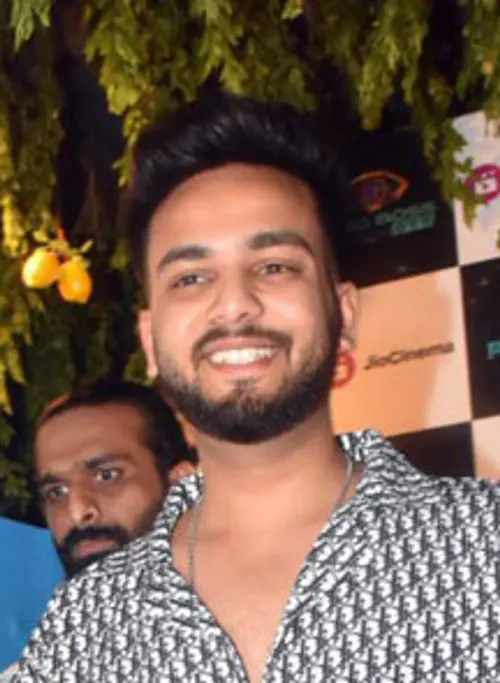
This profile is part of YadavNews.in's effort to document high-achieving members of the Yadav community with named sources and dates, not rumour. For the community's own background, our fact-checked history of the origins of the Yadav community sets the social story against the documentary record, and the verified guide to notable Yadav personalities situates Rajpal among the entertainers, the cricketers and the politicians we follow. The natural contemporary contrast in this archive is Elvish Yadav, the YouTube-era comic who inherited, without meaning to, something of Rajpal's everyman persona for a generation that discovered it on a phone instead of a cinema screen; both appear in the entertainers section.
Filmography dates, award listings and the legal and financial episodes described here are drawn from court records, official film databases and on-the-record interviews, not tabloid paraphrase, with each reference verified and dated in the sources panel. Where a claim has been contested in open court or by the parties involved, we report the dispute and its status instead of settling it. Our corrections policy explains how we update this record as cases and credits develop. For an outside summary that is continuously maintained, the Rajpal Yadav profile on Wikipedia is a reasonable cross-check, though this biography relies on the primary filings and releases it lists.
Reading the Record
Comedy careers are notoriously hard to pin down on paper (roles are uncredited, recordings are disputed, and a single film's release date can shift the whole frame of a biography) so this profile is deliberately conservative about chronology. Where a filmography entry or award could not be confirmed against an official record, it is left out, not estimated; where dates differ between a producer's claim and a distributor's record, the article notes the uncertainty instead of picking a winner. The same care applies to the financial and legal episodes: numbers are reported only when they appear in filings or on-the-record statements, and the article describes the court's documented findings, not the versions circulated in entertainment media. Readers who want to place Rajpal's rise inside the wider story of Yadav names moving from small-town Uttar Pradesh into the Indian mainstream will find the social-historical context (carefully separated from showbusiness legend) in our fact-checked history of the origins of the Yadav community.