Biography & Career Overview
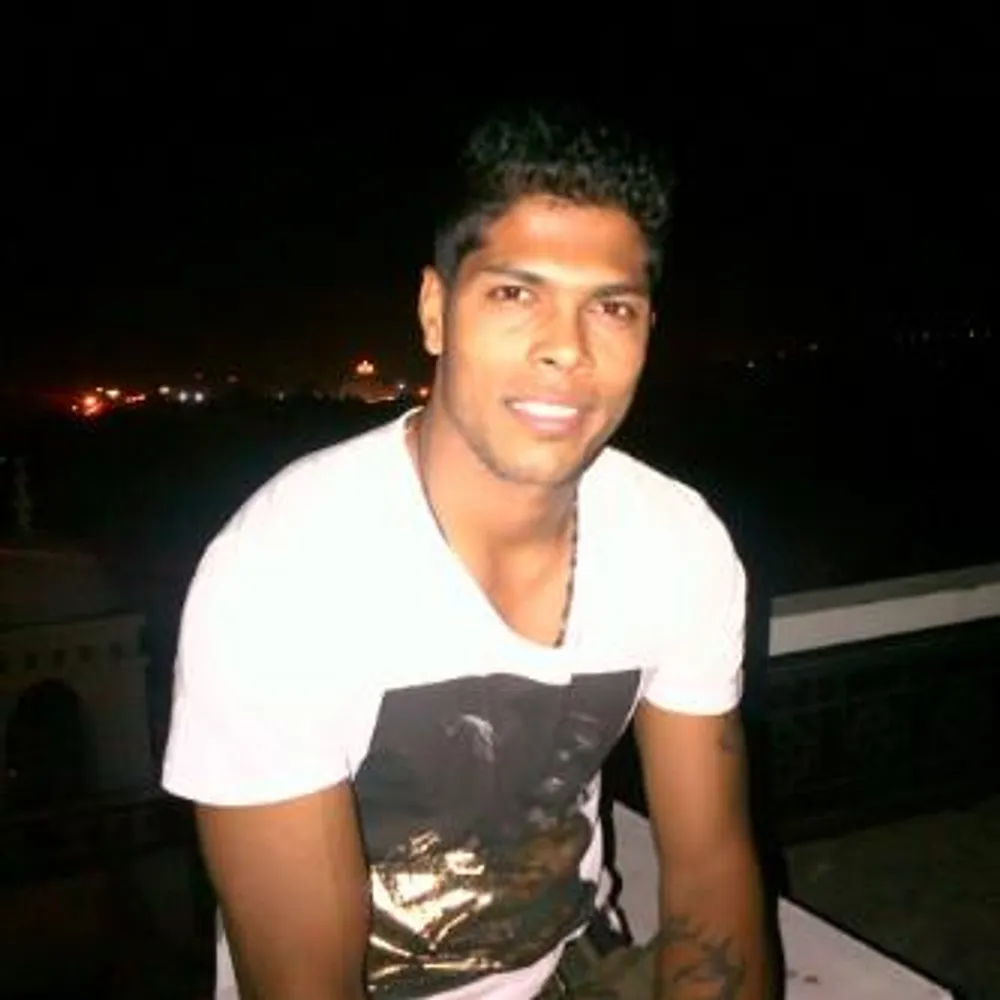
Umeshkumar Tilak Yadav, known to cricket fans simply as Umesh Yadav, is one of the fastest and most destructive Indian bowlers of his generation. Born on 25 October 1987 in Nagpur, Maharashtra, he rose from a family of modest means (his father Tilak Yadav worked in the coal mines) to become a strike bowler for India in all three formats, regularly clocking speeds above 145 km/h and famous for the disconcerting, helmet-high bounce he extracted from even flat tracks. Over a distinguished international career he played 57 Tests, 75 ODIs and 9 T20 Internationals, 141 matches in all, taking close to 290 international wickets. He was a member of the Indian team that won the 2013 ICC Champions Trophy at Edgbaston, was India's highest wicket-taker at the 2015 Cricket World Cup, has won five IPL titles across three franchises, and carries the Yadav name into the history of Indian fast bowling, the rare discipline in which India has historically struggled to produce genuine express pace.
Early Life in Nagpur: From Hockey Goalkeeper to Spin Bowler to Express Pace
Umesh was born and brought up in Nagpur in the Vidarbha region of Maharashtra, in a household where sport was a passion but money was tight. His father, Tilak Yadav, was originally from Deoria district in Uttar Pradesh and had taken work in the coal mines, with reporting on the family placing him at the Valni mine settlement at Khaparkheda in Nagpur district, where the family lived in the quarters allotted to mine workers; Umesh himself has described growing up watching his father's struggles as a coal miner, and ESPNcricinfo's account of his rise is built around that mining village. Like many Maharashtra boys of his class and era, cricket shared him with football and hockey; published career profiles note that the teenage Umesh first tried his hand at other sports, including spells as a hockey goalkeeper, before cricket claimed him fully. No published source documents a school-leaving certificate, degree or college for him, and this page claims none; what the reporting does record is the ambition that came before cricket's pull - franchise and feature profiles note that as a young man in Nagpur he was preparing for a career in the police forces - and he came up through Vidarbha's district and age-group sides, not through an academy or a university team. Curiously for the bowler India came to fear, he began as a spinner: his early coaches used his big frame to bowl spin, and only as he shot upward in height, developing the run-up and the natural high-arm release, did the transition to express pace happen. Working through the Vidarbha age-group and district sides in a cricket region that produced more batsmen than fast bowlers, Umesh ground his way into the state team the slow way, the way that produces hardness.
Domestic Career: Making Vidarbha Matter
Umesh made his first-class debut for Vidarbha in the 2006-07 season, and for several years he was the state's principal strike bowler in the Ranji Trophy, learning line and length, and the economy of effort on pitches that rarely assisted pace. His breakthrough into the national consciousness came through sheer wicket-taking on unresponsive surfaces and, above all, through the IPL, the shop-floor where Indian quick bowlers are stress-tested against the world's best hitters. His domestic career has run in parallel with his international one throughout: even after his last India appearance in 2023, he has continued to turn out for Vidarbha, the team that made him, and remains one of the most recognisable veteran professionals in India's domestic circuit.
IPL Career: Five Titles, Three Franchises
Umesh's IPL story began in 2011 when he entered the league as one of the most talked-about uncapped Indian purchases and quickly established himself with the Kolkata Knight Riders, becoming part of the side that won the 2012 and 2014 editions. In 2015 he moved to the Mumbai Indians in a mid-season swap, beginning the longest and most decorated stretch of his league career: with Mumbai he won three titles, in 2017, then 2019 and 2020, bowling the hard-line overs at the top and death of innings, his celebrations, the leaping, choreographed dances at the boundary rope, among the league's most recognisable images. A stint with Punjab Kings followed before the Gujarat Titans bought his experience at the 2022 mega auction; he has been a senior member of their pace attack through the 2026 season. In the league overall he has taken around 144 IPL wickets in roughly 148 matches, which makes him one of the franchise era's most consistent Indian quicks.
International Career: The Express Years
Umesh's India career started in the shorter format first: he made his ODI debut in December 2009 against Sri Lanka in a series that announced a genuinely quick arm, though the 2011 World Cup came too soon and he watched India's home campaign from outside the XI. His Test debut followed in November 2011 against the West Indies at Kingston, and his T20I debut in the same window; within two years he was a regular across formats. The signature chapter came in 2013, when he was picked for the ICC Champions Trophy-winning squad at Edgbaston and announced himself as part of India's pace future, and in 2015, when he finished as India's highest wicket-taker at the World Cup in Australia and New Zealand, a tournament that also fixed the image of his career-defining attribute at the Melbourne Cricket Ground: the hostile, rising bouncer that turned even great batsmen into spectators and sparked one of the series' most talked-about duels with Australia's David Warner. At his peak ICC rankings placed him among the top Test bowlers in the world, and his match-winning spells, from the Caribbean seamers' trails to green-tinged days at home, made him a mainstay of an attack that carried India up the World Test Championship standings.
The second half of his international career is a candid study in the injury physics of express pace. Recurring knee and hip trouble cost him selection through 2019-2021; he clawed back into the side on England's 2021 summer, bowling spells in a drawn series that reminded Test crowds why he had been feared, and was named in India's squad for the inaugural World Test Championship final against Australia at The Oval in June 2023, India's narrow loss. That match, on 7 June 2023, was his last appearance in Indian colours. He has not announced a formal international retirement and no subsequent India selection has followed, and the 38-year-old now plays the IPL and the Ranji Trophy while mentoring younger quicks.
Playing Style: Height, Bounce, and Controlled Aggression
Standing around 6'2" with a high release and long levers, Umesh bowled the ball that Indian fast bowlers historically could not: hard-length express pace that arrived fast enough to rush set batters and carried off even good lengths with frightening elevation. His stock delivery was the hard sixth-stump line with extra bounce; his variation was less a scripted inswinger than sheer pace-off-the-deck, and his method was pressure, a four-over spell of hostile lines designed to force the half-chance, not the perfect ball. At his best he was a match winner in both directions: he could swing the new ball on green days and rear it at the throat on dustbins. His limitations, occasional over-reliance on length and the wear rate that comes with extreme pace, are part of the same record: the peaks were world class, and the injuries came with the bowling style.
Personal Life
Away from cricket Umesh keeps a largely private personal life, which he shares with his wife Tanya Wadhwa, whom he married early in his international career; the couple were blessed with a baby girl in January 2021, announced by the bowler himself. Nagpur remains his base and his sporting identity; the city's cricket public adopted him as one of its own, and his rise is cited locally whenever the question of infrastructure investment in Vidarbha cricket comes up. His dance-step celebrations, his open affection for his family on camera after milestones, and his unmanufactured village-to-world arc have made him one of the more quietly beloved figures of his generation of Indian cricketers.
His Father's Death, Three and a Half Months Before the Last Test
Tilak Yadav died on 23 February 2023 at 74, after a prolonged illness, as reported by Hindustan Times, ANI and India Today; their accounts place the family's origins in Deoria district of Uttar Pradesh and their settled home in the Valni mine area of Khaparkheda in Nagpur district, where he had worked for the coalfields, and the Board of Control for Cricket in India issued condolences on his death. Umesh has spoken publicly about watching his father's struggle as a mine worker while growing up, and it is that background, rather than any sporting academy, that the long-form profiles of his career begin with. Three and a half months after his father's death, on 7 June 2023, Umesh bowled in the World Test Championship final against Australia at The Oval, the last match he has played in Indian colours. The two dates are recorded here side by side because a biography that lists only the cricket would misrepresent the year they happened in.
His Place in the Yadav Story: Context, Cross-Links and Sources
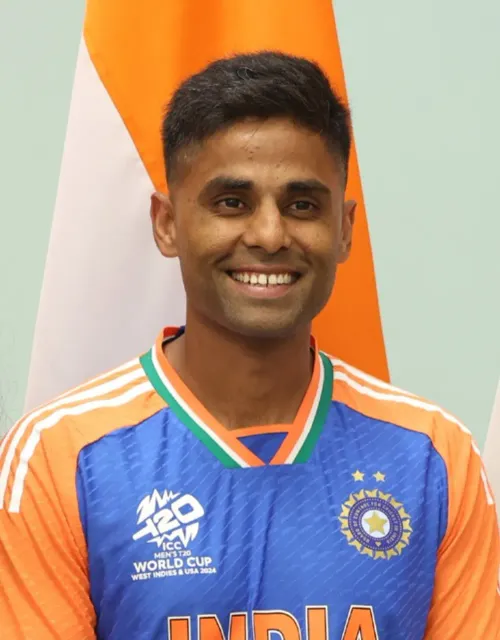
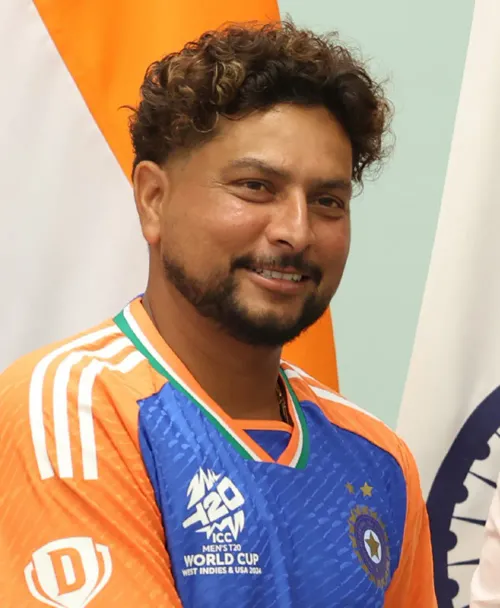
Umesh Yadav extends the Yadav achievement record from Suryakumar Yadav's batting and Kuldeep Yadav's spin into the discipline of express pace, the hardest road for an Indian bowler and one Umesh walked further than almost any contemporary. Within this archive's cricket section, his career overlaps directly with both: the IPL dressing rooms, the white-ball tournament squads and the 2023-2026 succession cycle connect his story to theirs, and the cricketers hub gathers the full set. On the community dimension that makes the surname itself a research topic, the fact-checked long read the origins of the Yadav community and the verified guide to notable Yadav personalities provide the documented backdrop. Every match number here reconciles with published scorecards from host boards and the ICC; where an outside source disagrees with our record, the corrections policy explains how we resolve it. For a continuously-maintained third-party summary of the same figures, the Umesh Yadav profile on Wikipedia is a reasonable cross-check, though our working numbers are drawn from primary records.
The Anatomy of a Umesh Spell
Batting coaches single out his four-over bursts because Umesh's plan rarely involved mystery; it involved commitment. The stock ball was a hard length just outside off or on a right-hander's ribs at 145-plus km/h, delivered from a full, long run-up that built momentum through the crease. Because he released the ball from well above average height, the same respectable length behaved like a short one off the deck. Batters forced to respect that bounce had to play two deliveries for every one ball, and Umesh exploited the resulting indecision with the change of speed down to a back-of-length cutter, or simply by repeating the hostile line until the half-shot arrived. His field placements, with slips and short leg crowded, advertised the intent: he bowled to take edges and catches off the glove, not to defend runs. It is a high-risk, high-reward craft, which is why his best Tests produce win-now spells and why the same aggression shortened his availability between seasons. Few Indian bowlers have held 145 km/h for a decade; Umesh is one of them, and that longevity underpins his wicket tally.
How This Profile Was Verified
International match counts, debuts, tournament memberships and the 7 June 2023 cut-off for his India career were reconciled against the scorecards published by the host boards and the International Cricket Council; IPL franchise movements and title years were checked against auction records and tournament final scorecards; personal details (marriage to Tanya Wadhwa and the January 2021 birth of his daughter) are taken from the cricketer's own announcements as reported by named outlets. Statements about speed and bounce describe his widely documented bowling characteristics, not measured averages, and the profile deliberately avoids quoting best-match figures it cannot reconcile to a primary scorecard. Where an outside source disagrees with our record, our corrections policy explains how we resolve it; the Umesh Yadav page on Wikipedia is a continuously maintained cross-check, while our working numbers come from the underlying primary records. Every claim above carries a verification date in the sources panel, and date-sensitive items (team membership, selection status) are reviewed each season.
Reading the Record
Totals like 288-odd international wickets understate his peak value and overstate his late-career availability. From roughly 2013 to 2018 he was among the three or four most feared Indian quick bowlers in Tests, in an era when India's pace bench was deep; he won five IPL titles; and he kept playing the IPL and the Ranji Trophy after 2023, at an age when many peers retired. He bowled express pace in hard body-maintenance conditions for well over a decade, so his record is better read against those conditions than against raw columns.
.jpg)