Biography & Career Overview
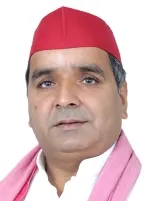
Dharam Pal Yadav, who appears on ballot papers and in office records as D. P. Yadav, was born on 25 July 1948 in Sarfabad, a village in Gautam Buddha Nagar district of Uttar Pradesh that has since been swallowed by the western edge of Noida. He held elected office continuously from 1989 to 2004, and again from 2007 to 2012. Four times he won a seat in the Uttar Pradesh Legislative Assembly, once he won the Sambhal seat in the Lok Sabha, and once he went to the Rajya Sabha on the Uttar Pradesh ticket. He was a cabinet minister in the first Mulayam Singh Yadav government in the state, and he has been elected under five party labels, the last of them his own: he formed the Rashtriya Parivartan Dal in 2007 and has been its president since.
Two other parts of his public file bring searchers to the name. One is the set of criminal cases against him, which his Wikipedia article carries in a section of its own, along with the life sentence imposed in 2015 and the acquittal that followed in 2021. The other is his family. His wife Umlesh Yadav won a state assembly seat in 2007 and became the first politician disqualified by the Election Commission of India over undisclosed election expenses. One of their sons was tried and convicted in a Delhi murder case that drew national attention. This profile puts the dated electoral record first, states the allegations together with the outcomes attached to them, and holds the family entries to what the consulted sources actually say about them. Where two sources disagree, the disagreement is printed instead of smoothed over.
Sarfabad, a dairy and a block chair
The family are described in the reporting behind his article as farmers of Sarfabad, near what is now Sector 73 of Noida. His father, Tejpal Yadav, ran a dairy in Jagdish Nagar. Yadav is an alumnus of Banaras Hindu University, the Varanasi institution that supplied much of the socialist and Samajwadi leadership of eastern Uttar Pradesh.
His first elected post was at block level. His article records him as Block Pramukh of Bisrakh, in what was then Ghaziabad district, territory now inside Noida. It also places his entry into the country liquor trade in the late 1970s as a protégé of Mahendra Singh Bhati, then the MLA for Dadri, and calls Bhati his mentor. That relationship frames the rest of his legal history. Bhati was killed in 1992, the Central Bureau of Investigation accused Yadav of the murder in the same year, and the case ran for another twenty-nine years after that. The first police case registered against Yadav was earlier still, in 1979, at the Kavi Nagar police station in Ghaziabad.
Bulandshahr: three assembly terms under three labels
Yadav came into politics through the Janata Dal year and won the Bulandshahr seat in the 1989 Uttar Pradesh assembly election, in the wave that put Mulayam Singh Yadav in the chief minister's chair for the first time. He became a cabinet minister in that government. His article does not name the ministry he held, and no portfolio is claimed here.
He held Bulandshahr twice more, taking his first string of assembly terms to 1996. The party table in his article gives each term a different label: Janata Dal for 1989 to 1991, Janata Party (Secular) for 1991 to 1993, and Samajwadi Party for 1993 to 1996. The last of those is the party Mulayam Singh Yadav founded in 1992 after splitting from the Janata Dal, so the switch stayed inside the same broad socialist bloc. In the same year as his second Bulandshahr win he also tried for the Lok Sabha, contesting Sambhal on the Janata Party ticket and taking 18.88 per cent of the vote in a contest he lost.
Sambhal, and then the upper house
He moved to the Bahujan Samaj Party to contest the 1996 general election, and the party fielded him in Sambhal, the seat he had failed in five years earlier. He won, and sat in the 11th Lok Sabha from 1996 to 1998. The rolls of that Parliament list Sripal Singh Yadav as his predecessor in the seat and Mulayam Singh Yadav as his successor.
In 1998 he fought Sambhal again, this time on the Bharatiya Janata Party ticket, and lost to Mulayam Singh Yadav. He did not go back to the state assembly for a while. The BJP took him to the Rajya Sabha, where he represented Uttar Pradesh from 1998 to 2004. He contested Sambhal once more in the 2004 general election and lost to Ram Gopal Yadav of the Samajwadi Party.
The sequence of his party labels in those years is not recorded consistently. His own article's table places him in the upper house on the BJP ticket from 1998 to 2004. The article on the Rashtriya Parivartan Dal says that he joined the BJP ahead of the 2004 general election, that his stay was cut short by criticism inside the party over his criminal record, and that he reconstituted his own party after being expelled. Both accounts cannot be reduced to one sentence, and the order of those two claims is left unresolved here.
His own party, and a fourth assembly term
In 2007 Yadav fielded candidates under the Rashtriya Parivartan Dal, the party he had formed that year, and won the Sahaswan assembly seat. His wife took Bisauli in the same election, so the party finished that year with two members of the Uttar Pradesh legislature. His article translates the party's name as the National Transformation Party and lists him as its president.
He was back in a Lok Sabha contest in 2009, this time at Budaun, and lost to the Samajwadi Party's Dharmendra Yadav by about 32,000 votes. The result table for that constituency lists him as the Bahujan Samaj Party candidate, while his own article gives no party for the contest, a gap this profile does not fill by guesswork. He lost the Sahaswan assembly seat in 2012 to Omkar Singh Yadav. In the 2014 general election he stood twice, at Ghazipur and at Sambhal, and lost both. His 2014 election affidavit, archived by the MyNeta repository, records the contest on the Rashtriya Parivartan Dal ticket.
The family stayed in the arena after that. His wife contested Sahaswan again in 2017 and lost to Omkar Singh Yadav, the man who had taken the seat from her husband five years earlier. In 2022 his son Kunal Singh Yadav contested the same constituency on the party ticket and lost to a Samajwadi Party candidate.
The criminal cases, and the 2021 acquittal
His article states that he has been charged in nine murder cases, in three cases of attempted murder, in two cases of dacoity, and in many cases of kidnapping for extortion, along with charges under the Excise Act, the Gangsters' Act and the Terrorist and Disruptive Activities Act. The cases were filed in Ghaziabad, in Bulandshahr, in Moradabad and in Badaun in western Uttar Pradesh, and in Jind and in Sirsa in Haryana. In one Haryana case from the early 1990s, the article records that illicit liquor supplied by him was responsible for the deaths of around 350 people. He was arrested under the National Security Act during the BJP ministry of chief minister Kalyan Singh.
The case that followed him longest began with the killing of his former mentor. In 1992 the CBI accused him of murdering Mahendra Singh Bhati, then the MLA for Dadri. In March 2015 a trial court sentenced him to life imprisonment in the Bhati murder case, and he was lodged in a Dehradun jail. On 10 November 2021 the Uttarakhand High Court acquitted him in that case, recording a lack of evidence. The acquittal is the last word the consulted sources carry on that prosecution, and this profile prints the acquittal as its outcome.
His own paperwork supports part of the picture. The 2014 affidavit he filed for the Ghazipur contest declared five serious criminal cases against him, among them murder, attempt to murder and extortion.
Money in the declarations
Two figures from the public record anchor the question of wealth, and both come from papers he signed or from reporting of them. In March 2007 the Indian Express reported that his family's declared assets of ₹26 crore made them a candidate for the title of Uttar Pradesh's richest political family. His 2014 affidavit put his declared assets at ₹59.51 crore, with liabilities of ₹8.78 crore. His wife's 2017 affidavit, also archived by MyNeta, declared assets of ₹55.10 crore against liabilities of ₹7.95 crore. Other numbers circulate for this family, including an estimate of a fortune well above ₹500 crore in a 2006 magazine article whose link no longer opens; no figure that cannot be traced to a declaration or a dated report is published here.
Family in the record
He married Umlesh Yadav in 1968. She represented Bisauli in the state assembly from 2007, and in October 2011 the Election Commission of India disqualified her for three years for suppression of election expenses, the first such disqualification in the country. Her own article ends her term in 2011 while her husband's article says she held the seat until 2012; the two pages are not consistent and both readings are recorded in the note on verification below.
The couple have two sons and two daughters. His article states that their son Vikas Yadav was convicted of the 2002 murder of Nitish Katara, and that the trial court treated that killing as an honour killing, the victim having been in a relationship with a daughter of the family. The same article names Vikas Yadav among those convicted in the 1999 Jessica Lal case. The article on that case records a longer sequence: Yadav faced charges of destruction of evidence, along with conspiracy and harbouring a suspect, and was not charged with the shooting; nine accused were acquitted at first instance in February 2006; the Delhi High Court overturned those acquittals later that year; and in December 2006 Vikas Yadav and one co-accused were fined and given four years of rigorous imprisonment. This profile records those outcomes as the two articles state them. It does not trace the appeals that followed, which the consulted pages do not carry, and it asserts no final finding about any person other than the office-holder it is about. The later private life of his daughter is not published here.
Which D. P. Yadav this page is about
The name is written several ways in the record: D. P. Yadav, DP Yadav, D P Yadav, Dharam Pal Yadav. Searches for it reach this Uttarakhand-acquitted, Sambhal-elected Uttar Pradesh politician, and the family queries attached to the name, for a photograph, for a Noida address, for a son and for a daughter, belong to the same household. Two cautions apply. An independent candidate named Dharmendra Yadav also ran in the 2009 Budaun contest, and that record belongs to a different person from the Samajwadi Party member of the same name who beat D. P. Yadav in the election. And this page is not about the many office-holders surnamed Yadav who appear elsewhere on this site; the Bulandshahr and Sahaswan paper trail belongs to Dharam Pal Yadav of Sarfabad.
How this profile was verified
The dates, offices, party labels, vote shares, margins, case history and affidavit figures in this profile were taken from the English Wikipedia article on D. P. Yadav and read on 2 October 2026, then cross-checked against the article's positions table, the MyNeta archive of the 2014 affidavit, the Hindustan Times report of the 2021 Uttarakhand High Court acquittal, and the Wikipedia articles on Umlesh Yadav, on the Rashtriya Parivartan Dal and on the Jessica Lal case, with the Sambhal result tables taken from an election archive. Four points are deliberately left open. The ministry he held in the 1989 state government is not named, because the article does not name it. The party he carried in the 2009 Budaun election is given as the result table gives it, with the silence of his own article noted. The start of his BJP years is reported twice and inconsistently, in his article and in his party's. Umlesh Yadav's assembly term ends in 2011 in one article and in 2012 in the other. The 2006 estimate of a family fortune beyond ₹500 crore is excluded because the source link no longer resolves, and the appellate history of the cases involving his son is excluded because the consulted articles stop short of it. Corrections can be filed under the correction policy on this site.