Biography & Career Overview
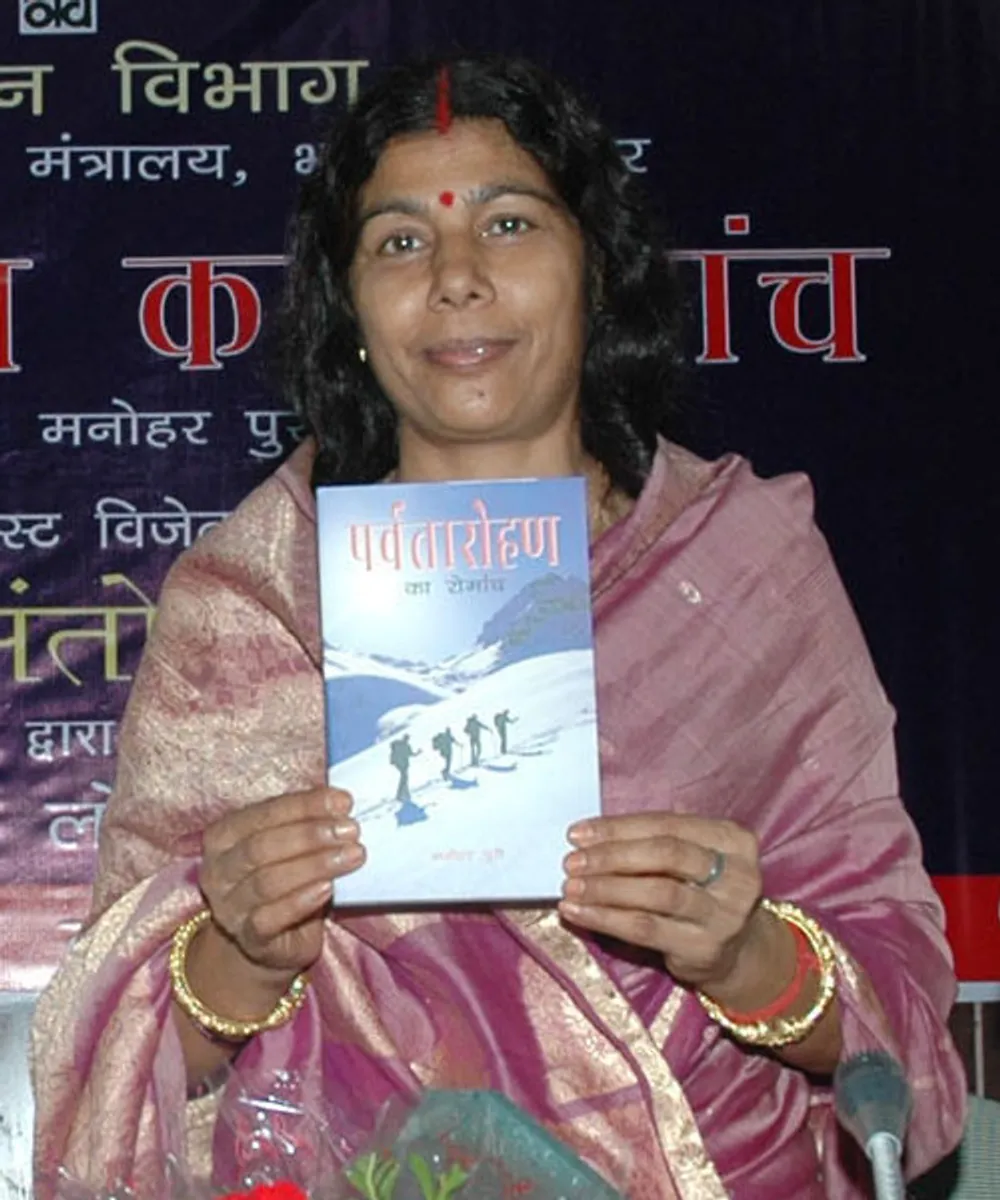
Santosh Yadav (born 10 October 1967) is an Indian mountaineer who wrote herself into the history of world exploration as the first woman on Earth to climb Mount Everest twice, and (by extension) the first person of any gender to stand on the summit of the world's highest mountain in two separate years. The remarkable part is less the altitude than the starting point. Santosh grew up in the dusty, snowless town of Narnaul in Haryana, in a family with no Himalayan tradition, and by her own account saw and touched snow for the very first time only after she enrolled at a mountaineering course as a young woman. From that blank beginning she rose to conquer Everest in 1992 and again in 1993, became a national icon, was honoured with the Padma Shri in 2000, and spent the years after her summits teaching at the institute and leading expeditions. She also campaigned for adventure, and for women's participation in the outdoors. This profile records her climb-by-climb public record from named sources.
Early Life in Narnaul and the First Sight of Snow
Santosh Kumari Yadav was born on 10 October 1967 in Narnaul, then in Haryana (in the region that would later become part of a reorganised Haryana), into a modest family that valued education but had nothing to do with mountains. She studied locally (a BA and an MA from Haryana universities, with a leaning toward literature and education) and, consistent with the expectations of a small-town Indian family for an educated daughter in the late 1980s, moved toward a career in teaching. The turn came through a chance meeting with a friend's father, a mountaineer, who suggested she try a course at the Nehru Institute of Mountaineering (NIM) in Uttarkashi, Uttarakhand, in 1990. It was there, at the institute high in the Garhwal Himalaya, that the flatlands girl first saw snow, and discovered, to her own surprise, that she had a natural talent for the mountains: stamina, high-altitude tolerance, a calm temperament the instructors noticed immediately.
The Nehru Institute of Mountaineering: From Novice to Instructor
At NIM, Santosh cleared the Basic course, then the Advanced course, then the Preparation and Expedition course, which is the standard ladder that turns a beginner into someone fit to be led onto a real peak. Her progress was fast enough that the institute, and later the Indian mountaineering establishment, took her seriously as a climber. The training-ground culture of the Indian Himalaya in the late 1980s and early 1990s was opening, slowly, to women. Bachendri Pal had become the first Indian woman on Everest in 1984, and the women who came through the institute system after her, Santosh among them, made Indian women a permanent presence on the highest peaks. Santosh's own route into Everest ran through this pipeline of NIM courses and assistant roles on smaller Himalayan expeditions before she was selected for the biggest challenge available.
1992: Everest, the Rescue, and a Nation's Attention
In May 1992, aged 24 and still little known outside mountaineering circles, Santosh reached the summit of Mount Everest (8,849 m) as a member of the Indian Everest Expedition (the "Everest-Jaya" team), becoming one of the youngest Indian women to do so. The climb made headlines. What turned her into a household name happened on the way down. During the descent and the exhausting high-altitude work, she is credited with risking her own safety to help a collapsing, oxygen-depleted fellow climber survive, giving up her own oxygen and physical support in the unforgiving "death zone," a deed reported widely at the time and cited since as the reason her name outgrew the climb itself. She returned to India famous, with no intention of letting one Everest be the end of it.
1993: A Second Summit That Set a World First
Santosh climbed Everest again in May 1993, this time as a member of the historic Indo-Nepalese Women's Everest Expedition, a joint India-Nepal team of women that summited via the standard south-col route from the Nepali side. That second summit made her the first woman in the world to climb Mount Everest twice and, at the time, the first person ever to have reached the summit in two separate years. In an era before commercial guiding turned Everest into a queue, doing the mountain twice (and within consecutive climbing seasons) was an elite global feat, and it put an unconnected girl from the Haryana plains permanently in the record books. She remains widely cited, including by Indian and international mountaineering sources, as a pioneer for women in high-altitude climbing.
Beyond Everest: Kangshung, Leadership and Teaching
After her double Everest, Santosh moved from summiteer to expedition leader and instructor. In 1999 she led an Indian expedition to the Kangshung Face of Everest (the difficult, rarely-attempted east side in Tibet), the Millennium Indian Everest Kangshung Face Expedition, and in 2001 led a team on the East Face, still pushing technical and exploratory boundaries instead of resting on what she had already done. A retrospective in the magazine The South Asian described the 1999 climb as the first successful Indian expedition to that face led by a woman, and her mainstream profiles credit her in addition as the first woman in the world to have climbed Everest from the Kangshung Face, a route claim this page carries as recorded, not as independently verified. She became an instructor at the Nehru Institute of Mountaineering, the institute that had trained her. She mentored young climbers. She founded or backed adventure programmes and women's-mountaineering initiatives, and she put her fame to work for social causes (education and health awareness among them), travelling widely as a brand and public ambassador for the outdoors. Her autobiography and public talks, titled around her climbs, turned her life into a template for small-town Indian girls with no mountaineering background.
Honours and Legacy
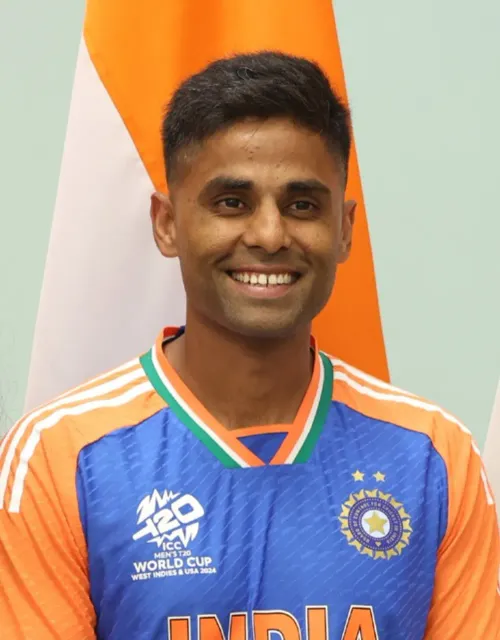
For her climbing and her pioneering role for women in the sport, the Government of India awarded Santosh Yadav the Padma Shri in 2000, the country's fourth-highest civilian honour. Six years earlier, in 1994, she received the National Adventure Award, the state's recognition for achievement in the adventure field, which her encyclopaedia biography records alongside the Padma Shri, and which Femina's profile of her repeats as India's highest adventure-sports honour. She has received national adventure recognition, sports honours and civic citations, and the distinction of being among the very first climbers to have summited Everest twice. The wider effect has been cultural, and about who is allowed to try at all. In a country where a girl from a plain, landlocked, snowless town was expected to prioritise marriage and a teaching job, Santosh showed that the highest mountains on the planet were reachable from the humblest starting point. She is grouped in this archive deliberately alongside the Yadavs who carry the community's name into global achievement, the mountaineering counterpart to Suryakumar Yadav and Kuldeep Yadav in world cricket, to record that "Yadav" appears at the summit of sport and exploration as plainly as it does in politics. Her profile sits within the wider guide to notable Yadav personalities.
What Her Record Meant for Indian Mountaineering
To understand why Santosh Yadav's two summits still carry weight, it helps to place them in their era. In the early 1990s Everest was not the commercialised, guided ascent it later became: being chosen for an Indian expedition meant years of institute training, competitive selection, fitness tests and previous experience on smaller Himalayan peaks. The women who passed through that system (Bachendri Pal first in 1984, then the generation of 1992-93 that Santosh joined) carried the whole reputation of Indian mountaineering with them, and their results decided whether the doors opened behind them would stay open. Santosh's answer under those conditions was unusually complete. She summited. She proved she could bring someone else down alive. She summited again the following year on a joint international expedition. Then she spent the next decade on the teaching and leading side of the same institute system that had made her. Few climbers anywhere, in any decade, have occupied every rung of that ladder so quickly and so visibly, which is why her name remains a standard citation whenever the history of Indian women's mountaineering is written.
How This Profile Was Verified
Date and place of birth, the sequence and years of her Everest summits (1992 and 1993), the Indo-Nepalese Women's Expedition, the Kangshung Face and East Face leadership roles in 1999 and 2001, the National Adventure Award year, the Padma Shri year and her NIM training were cross-checked on 5 October 2026 against her biography in the English encyclopaedia, Times of India's 2016 profile, Femina's account of her awards, the Doordarshan and Prasar Bharati archival interviews that keep her story in circulation, and The South Asian's retrospective on the 1999 expedition. Where popular retellings differ on a fine detail this profile keeps to the version the sources agree on and leaves the disputed detail unsettled: the day-date of the second summit reaches us as both 4 May 1993 and 10 May 1993 in archival and social summaries, so this page publishes only the month, and the name of the climber she is credited with saving in 1992 is not settled by any source read here. Our continuing third-party cross-check is the Santosh Yadav article on Wikipedia; working facts are drawn from the underlying reporting. If any figure is wrong, the corrections policy explains how to have it fixed once flagged with evidence.