Biography & Career Overview
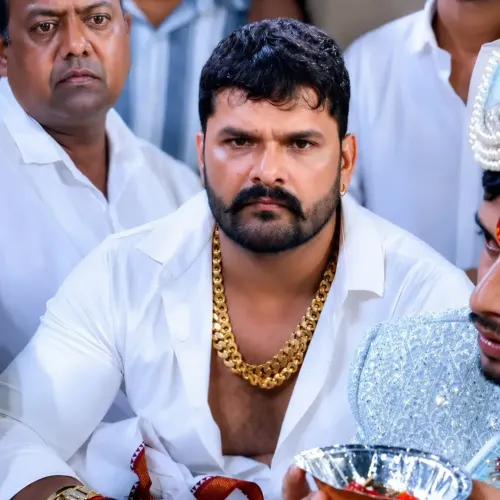
Dinesh Lal Yadav (known to tens of millions across north India simply as "Nirahua") is the most recognisable face of Bhojpuri-language cinema and an unlikely member of the national Parliament. Born on 2 February 1979 into a modest family in eastern Uttar Pradesh, he turned a folk-and-film career that many elite industries dismissed into a mass enterprise: as an actor and playback singer of dozens of Bhojpuri films and songs, he became a cultural phenomenon of the Purvanchal and Bihar heartland, then crossed over into electoral politics as a Bharatiya Janata Party (BJP) candidate in eastern Uttar Pradesh. He won the Azamgarh Lok Sabha seat in the June 2022 by-poll and sat in the Lok Sabha until the constituency changed hands in the 2024 general election; he had first contested the same seat in 2019 and lost. His passage from an unknown village boy to a superstar who held a parliamentary seat is a study in how regional language cinema and caste-community identity now feed directly into electoral power in India's most populous state. This profile documents that public record from named sources.
Roots in Eastern Uttar Pradesh
Nirahua was born Dinesh Lal Yadav into a Yadav family in Ghazipur in the eastern Uttar Pradesh belt, a region of small farms, dense population and a deep Bhojpuri-speaking folk culture. The village he himself gave as his permanent address in his 2024 election affidavit, and which the Parliament of India carries in his member biography, is Tadwa (also spelled Tandwa or Tadawa) in the Souri tappa of Ghazipur district; this profile prints the village and stops there, and does not republish the house number, post office or telephone numbers that appear in those same records. The same affidavit gives his father's name as Kumar, which agrees with the entertainment profiles that describe a father who sang and farmed, and the English Wikipedia article records the family as one of traditional Biraha singers of Ghazipur, the folk genre he later carried onto screen and into his own songs. He has spoken openly about an ordinary, financially constrained upbringing far from the film centres of Mumbai or even Lucknow. His formal schooling ends where his own papers say it ends: all three of his election filings, 2019, the 2022 by-poll and 2024, record his educational qualification as "12th", and no source checked for this profile documents a degree. Two details around that line come from secondary profiles, not from the affidavit. OneIndia writes that he spent his childhood in Belghoria in Kolkata, and the entertainment database StarsUnfolded gives the matching board result, "Intermediate from West Bengal Council Higher Secondary Education in 1997", which would put the Class 12 certificate in the year he would have been eighteen. Both are reported here as claims of those sites, and the archive's own summary is the affidavit word: a twelve-pass candidate. Before fame he absorbed the performing traditions of the region (the touring birha and kathania-style folk theatre and the small-town stage) which shaped the raw, colloquial style he later carried to screen. His breakthrough came not from an industry launch but from the Bhojpuri film boom of the early 2000s, in which a new star persona was built almost entirely on mass, rural, working-class appeal. The screen name that stuck ("Nirahua") came from his 2003 folk album Nirahua Satal Rahe, a hit that gave him the name his audience has used ever since, and he made his film debut three years later in the Bhojpuri drama Humka Aisa Waisa Na Samjha (2006), followed by Chalat Mushafir Moh Liyo Re (2006), Nirahua Rikshaw Wala (2008) and Pratigya (2008).
Building the Bhojpuri Superstar Brand
Through the 2000s and 2010s Nirahua became the defining male star of a Bhojpuri film industry that grew into one of India's largest regional-language producers by volume, driven by diaspora and small-town demand, not by metropolitan critics. Films such as Dil (2010) and Ganga Jamuna Saraswati (2012), which the Times of India reported earned 12.5 million rupees in three weeks, a record for the industry at the time, and the blockbuster Nirahua Hindustani (2014), his fiftieth film, made him a box-office guarantee, and he frequently sang his own hit tracks, blurring the line between actor and pop-folk star. His pairing with leading actresses of the industry (most famously the hugely popular on-screen combination with Amrapali Dubey) became a franchise in itself, and his songs and films routinely draw hundreds of millions of views on video platforms, giving him a digital footprint many "mainstream" Hindi stars cannot match. To his core audience in eastern UP and Bihar he is a homegrown superstar whose success they own, not a regional curiosity.
Crossover to Mainstream Screens
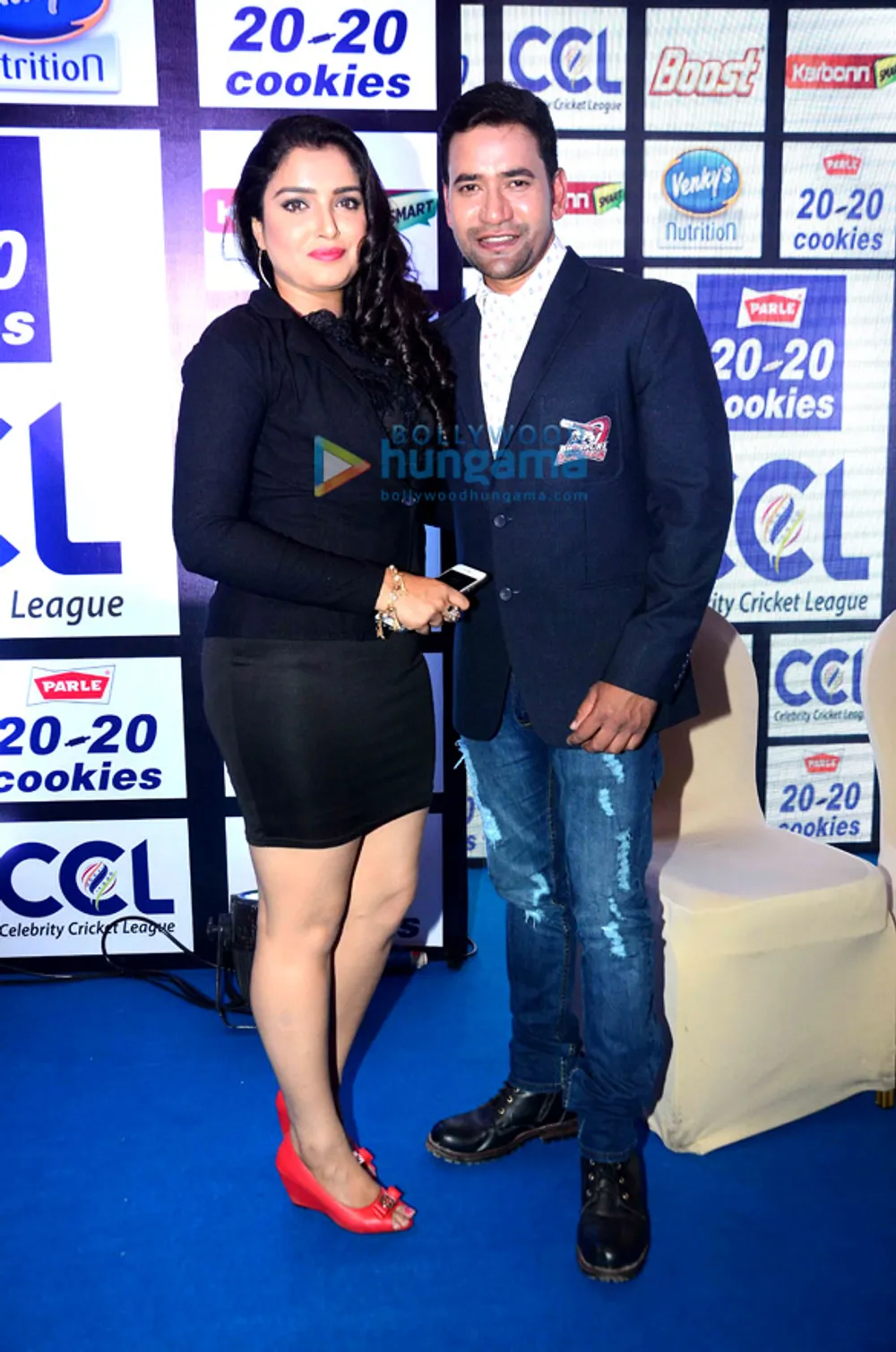
Nirahua's mass base eventually pulled him toward national screens and Hindi-language television. He was a contestant on Bigg Boss 6 in 2012, entering on day one, leaving on day eight, re-entering on day forty-two and leaving again on day sixty-six, and the same year appeared with Amitabh Bachchan and Jaya Bachchan in the Bhojpuri film Ganga Devi. His biggest crossover numbers came at home in Bhojpuri cinema. Nirahua Hindustani (2014), his fiftieth film, reached multiplex audiences, and Patna Se Pakistan (2015) and the patriotic Border (2018) are among his best-known releases; Border is one of the highest-grossing Bhojpuri films ever recorded, followed by Nirahua Chalal London (2019), shot in the United Kingdom, and the Bhojpuri web series Hero Vardiwala (2019), his debut on streaming platforms. He also runs his own production house, Nirahua Entertainment. The Uttar Pradesh government gave him the state's Yash Bharti Samman in 2016 for work in Bhojpuri cinema: the Times of India reported on 13 January 2017 that he was presented with it in Lucknow by the Chief Minister of Uttar Pradesh, and that the award is considered the highest honour the state government gives. The Chief Minister was Akhilesh Yadav, and the award itself was constituted by the Mulayam Singh Yadav government, which makes the later contest between the two men worth reading closely: a Times of India report from Bareilly dated 21 April 2019 framed Nirahua and Shailendra Singh Pratapgarhi, both honoured by Akhilesh Yadav in 2016, as candidates fighting him in 2019. The Celebrity Cricket League press-conference photograph that accompanies this profile records the same period when he began appearing before pan-Indian audiences. These moves ran in parallel with, and helped set up, his entry into electoral politics.
From Screen to Parliament: The Azamgarh Term
Nirahua joined the Bharatiya Janata Party in Lucknow on 27 March 2019 at a meeting attended by chief minister Yogi Adityanath, and on 3 April 2019 the party announced him as its candidate for the Azamgarh Lok Sabha seat, where he was pitched against former chief minister Akhilesh Yadav. He lost that contest. Akhilesh Yadav polled 6,21,578 votes to Nirahua's 3,61,704, a margin of 2,59,874 votes. He tried the same seat again in the by-poll triggered when Akhilesh Yadav vacated it after winning the Karhal assembly seat in the 2022 Uttar Pradesh election, and this time the star won: 3,12,768 votes, 34.39 per cent, enough to beat the Samajwadi Party's Dharmendra Yadav by 8,679 votes, with the Bahujan Samaj Party's Shah Alam 'Guddu Jamali' at 2,66,210. DNA India reported the result on 29 June 2022 as a superstar's conversion of fandom into a mandate.
He took his seat on 26 June 2022 and held Azamgarh for the remaining eleven months of the 17th Lok Sabha, leaving on 4 June 2024 when the 18th Lok Sabha was constituted. The parliamentary record for those eleven months is public and short. His member biography on the Parliament of India site lists him as a Member of the Standing Committee on Transport, Tourism and Culture from 13 September 2022, after the bye-election return, and PRS India's MP track record shows 90 per cent attendance, participation in three debates and thirty-six questions over the term. Those figures are the honest measure of a film career interrupted: an eleven-month term with one committee assignment, recorded here, not rounded up into a legislative reputation. The 2024 general election ended his parliamentary career: Dharmendra Yadav won the seat with 5,08,239 votes and a margin of 1,61,035, and Nirahua finished second on 3,47,204. The two men who then held the seat, Akhilesh Yadav before him and Dharmendra Yadav after him, are profiled in this archive, and both come from the same Saifai political family. His one term is still the sharpest available case study of the star-to-politician trade in the Bhojpuri belt, and it is analysed through the same lens this archive applies to other Yadav public figures: the mobilisation of a community's cultural identity into political representation, the story the origins of the Yadav community traces through caste, through census and through organisation. What the record also shows is the other half of that trade. He won Azamgarh once, by fewer than nine thousand votes in a by-poll, and lost it twice to the same family.
What He Has Declared: The Affidavit Record
Three sets of nomination papers filed by Dinesh Lal Yadav are held in the public archive kept by MyNeta and the Association for Democratic Reforms, and read together they give the financial outline of the star-to-politician transition. The 2019 general-election filing for Azamgarh records him as a twelve-pass candidate of forty, declares income of Rs 47,51,995 for himself for the financial year 2018-19, and shows cash of Rs 50,000 with bank deposits held at Axis Bank in Mumbai; the expenditure return for that contest records Rs 32,25,857 given by the candidate. The by-poll filing of June 2022 declares total assets of Rs 7,67,46,563, about Rs 7.67 crore, of which Rs 6,00,00,000 stands in the immovable column and cash appears at Rs 8,00,000 among movable assets, with one declared criminal case and an age of 43. The 2024 filing declares total assets of Rs 9,40,63,536, about Rs 9.41 crore, again as a twelve-pass candidate, again with one declared criminal case, at age 45, and with liabilities of Rs 81,13,319.
Between the 2022 and 2024 filings, then, the declared total rose by Rs 1,73,16,973, roughly twenty-three per cent of the earlier figure. That subtraction is performed on this page and is not quoted from any source, and the year it covers is the year he sat in the Lok Sabha, which is exactly the kind of interval that invites reading into. Two cautions are therefore part of the record, not a disclaimer. First, these are self-declarations filed with a nomination paper, covering the candidate, a spouse and any Hindu undivided family, not accounts tested by an auditor, and a rise on a form is a fact about a form, not a finding about conduct; no court or investigating agency has recorded any finding on his assets as of the date this profile was verified. Second, the archive's own numbers are not always internally consistent: MyNeta's candidate page for the 2022 by-poll shows liabilities of Rs 17,17,964 while that site's constituency table for the same election lists Rs 20,88,413 in the liabilities column, and this profile publishes the totals, which both MyNeta and the ADR annexure agree on, while flagging the liabilities disagreement instead of choosing between them. Consistent with the policy applied to the affidavit material elsewhere in this archive, the residential house number, post office, polling-part identifiers and telephone numbers carried in the nomination papers and the member biography are not republished here, because the public interest is in the assets and the record, not in the address.
Personal Life and Public Controversies
Dinesh Lal Yadav married Mansha Yadav in 2000, and he kept his family out of the on-screen persona for two decades. Moneycontrol reported in February 2026 that she was seen in public for the first time at a griha pravesh ceremony. Their children are two sons, Aditya Yadav and Amit Yadav, and a daughter, Aditi Yadav, who has trained as a boxer and whose videos have circulated widely. The other direction of the family tree is thinner. His father's name appears in the affidavit as Kumar, which is as far as a primary record goes; the entertainment databases that fill in the rest, naming the mother as Chandra Jyoti Devi and listing brothers including Vijay Lal Yadav, are single-source claims with no mainstream report behind them in the material checked here, so this profile records the father and treats those other names as unverified, not as biography. How the marriage itself came about is his own account, not a rumour: in a February 2026 interview reported by ABP Live and by LatestLY, he said his parents arranged the match, that he never fell in love with his wife and that he had been transparent about that within the family, remarks that drew public criticism and that this profile records because he made them himself about a marriage he has kept off camera for more than twenty-five years. Like many figures who bridge entertainment and politics in Uttar Pradesh, he has also faced legal and public controversies reported in the media, including criminal cases and arrests connected to incidents in his region, which his supporters have characterised as politically motivated and which courts and prosecutors have treated as matters to be tried. As with every profile in this archive, such contested episodes are reported as claims attributed to named sources and remain subject to due process; they are noted here for completeness because they are part of the public record people searching his name will encounter, not as findings of guilt.
Why He Matters to This Archive
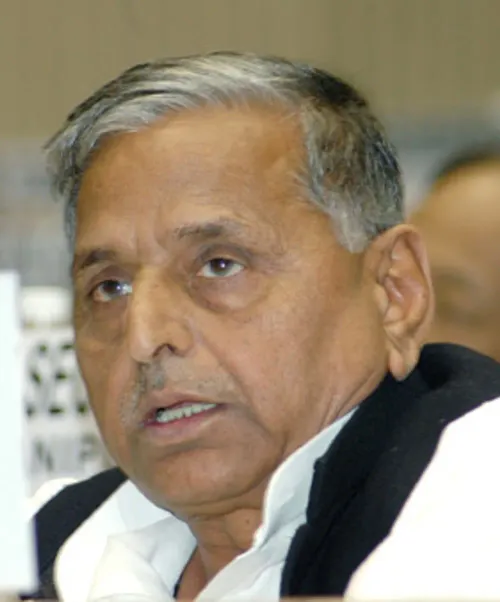
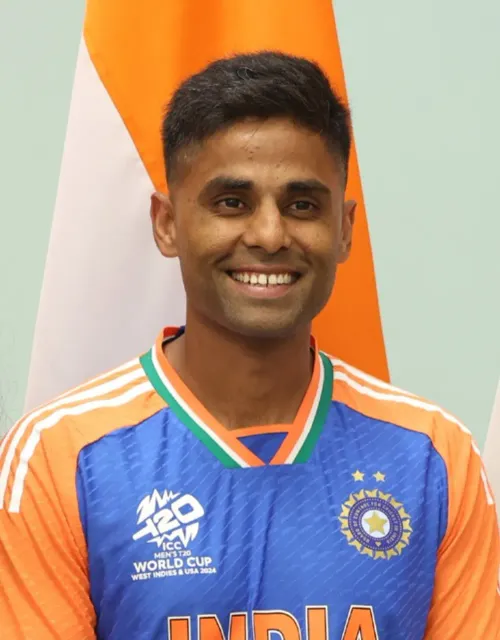
Nirahua is the entertainment pillar of the Yadav public-achievement story this site records. Where Suryakumar Yadav and Kuldeep Yadav carry the name into world cricket and leaders like Mulayam Singh Yadav and Lalu Prasad Yadav carried it into government, Dinesh Lal Yadav shows a third route to national prominence: mass regional culture converted into both celebrity and electoral mandate. His presence in the archive is deliberate, to document the range of ways the Yadav community's name now appears in Indian public life, from folklore to Parliament. His profile sits within the verified guide to notable Yadav personalities.
What "Nirahua" Means: A Star Built Outside Mumbai
Nirahua's career is worth reading as a case study in how Indian stardom can be manufactured entirely outside the metropolitan industry. Bollywood builds stars through casting agencies, film schools, dynastic lineages and national press tours; the Bhojpuri film industry of the 2000s built them through cassettes, small-town single-screen halls, song-and-stage tours and, later, YouTube. Dinesh Lal Yadav succeeded at precisely that second model: he is a Yadav boy from Ghazipur who spoke the region's language without apology, sang its folk idioms over dholak beats, and carried the mannerisms of its village hero into dozens of commercially successful films. That authenticity (not industry access) is the asset he later converted twice over: first into a digital audience measured in hundreds of millions of views, and then into a parliamentary mandate from Azamgarh. Understanding him as only a film actor, or only a politician, misses the point of his public significance: he is the clearest modern example of how cultural capital in the Bhojpuri-speaking heartland flows directly into political capital, the same pipeline this archive traces from a community-assertion angle in the origins of the Yadav community.
How This Profile Was Verified
Date of birth, birth place, party membership dates and the Azamgarh electoral record were re-checked on 5 October 2026 against the Dinesh Lal Yadav article on Wikipedia, whose election references include NDTV's report of 27 March 2019 and Dainik Jagran's of 3 April 2019, and against the constituency result tables for Azamgarh that tabulate Election Commission of India figures. The filmography, the Bigg Boss 6 run and the production house come from the same article's cited press coverage in the Times of India and from IMDb. Marriage and children are as reported by Wikipedia's Hindi-language citations and Moneycontrol's February 2026 report.
The self-declared record added in October 2026 comes from primary documents: the Election Commission affidavit portal copy of his 2024 nomination papers, which carries the Tadwa, Souri, Ghazipur address and the name of his father as Kumar, MyNeta's files for the 2019 contest, the 2022 by-poll and the 2024 election, with the site's own comparison of the last two, and the ADR annexure of asset details for the 2024 candidates together with the ADR Hindi report on sitting members, which independently reproduces the Rs 7,67,46,563 total with its Rs 1,67,46,563 and Rs 6,00,00,000 components and the single declared case; the twelve-pass qualification is recorded by MyNeta in all three filings. The committee assignment and the member's addresses come from the Parliament of India biography and the attendance, debate and question counts from PRS India. The Yash Bharti details are from the Times of India report of 13 January 2017 and the Bareilly report of 21 April 2019, and the village name is additionally carried by the Hindi Wikipedia article.
An earlier version of this profile published on this site stated that he was the Bharatiya Janata Party member of parliament for Kaushambi, elected in 2019 and re-elected in 2024, and that his wife is named Padma Singh. Both statements were wrong and have been corrected. He represented Azamgarh for one term, from 26 June 2022 to 4 June 2024. He lost that same seat in 2019 and contested it again in 2024. Where sources differ on a detail, this profile records the disagreement instead of inventing precision, and on this subject several dates disagree. The date this profile prints, 2 February 1979, is the one Wikipedia, OneIndia and the entertainment databases carry, and it is the one his own affidavit ages fit: forty-three in the June 2022 by-poll papers and forty-five in the April 2024 papers, two years apart as the comparison table itself notes. Against that, IMDb gives 22 March 1979, the BookMyShow profile gives 1977, and one 2026 blog profile gives 24 February 1979 and moves the birthplace to Deoria; those three are left out of the infobox and named here so that a reader who finds them can see how they were weighed. The home village was previously described on this page as unconfirmed; the Election Commission's own affidavit copy and the Parliament biography both name Tadwa in Ghazipur, and the earlier sentence has been corrected. Contested legal matters are reported as attributed claims, not adjudicated. Corrections can be requested through the corrections policy.