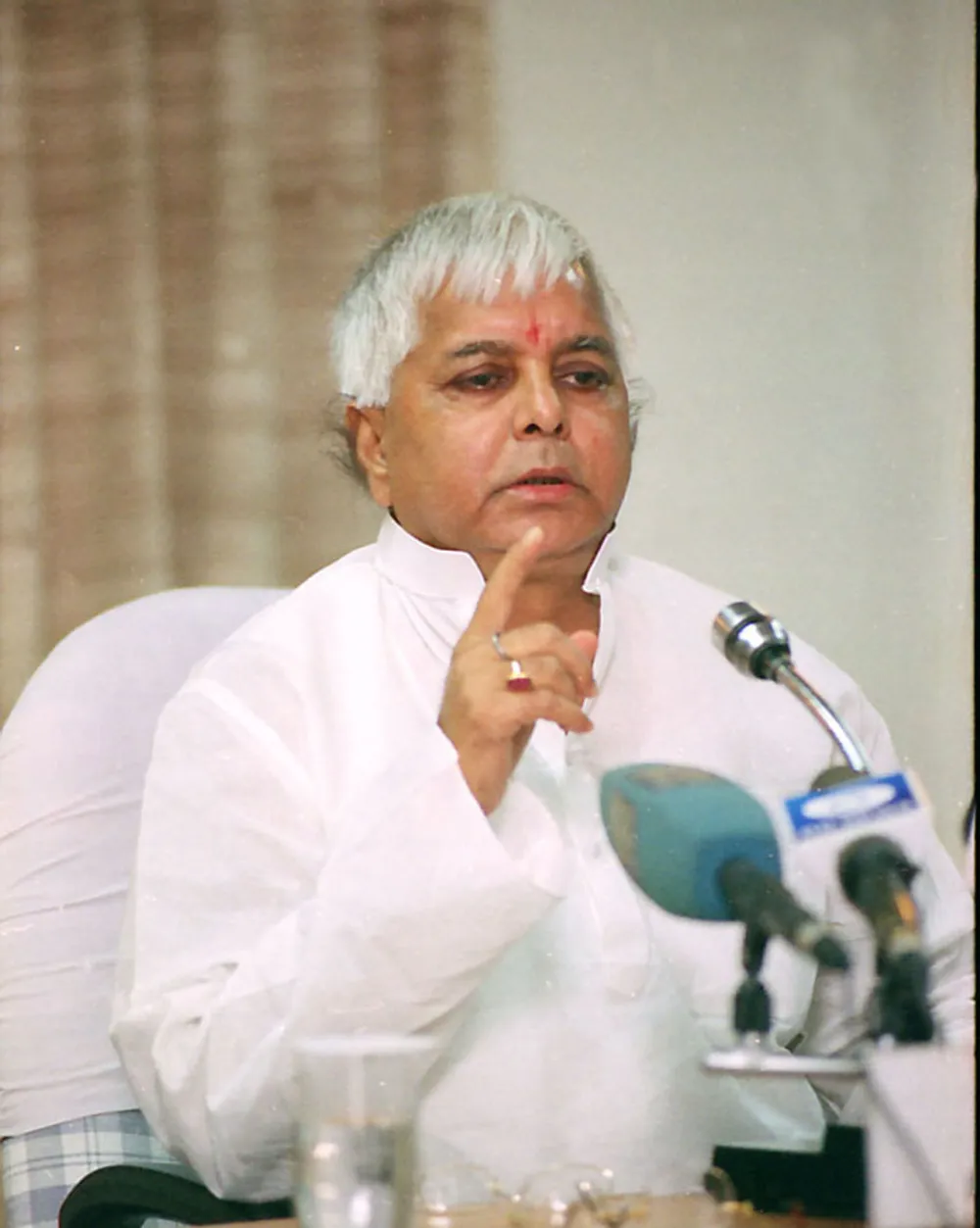
Biography & Career Overview
Lalu Prasad Yadav is the founding president of the Rashtriya Janata Dal and served twice as Chief Minister of Bihar, from 10 March 1990 to 28 March 1995 and again from 4 April 1995 to 25 July 1997, and as Union Minister for Railways in the first UPA government from 24 May 2004 to 23 May 2009. He was born on 11 June 1948 in the village of Phulwaria in Bihar's Gopalganj district and is one of the most consequential and most contested figures in modern Indian politics. He was the fifth of six sons born to Kundan Rai and Marachhiya Devi in a household that farmed a little and kept cattle, and he has spent four decades calling himself the son of a poor goala, a herder. The surname Yadav, historically attached to pastoral and other Backward Caste communities, became under him the banner of a mass movement that changed who held power in Bihar. Before the chief ministership he had already sat in the Lok Sabha from Chapra from 1977, in the Bihar Legislative Assembly from Sonpur from 1980 and again from 1985, and as Leader of the Opposition in that house from March 1989, returning to the Lok Sabha from Chapra in December 1989; after it he won Madhepura in 1998, a Bihar assembly seat in 2000 and a Rajya Sabha seat held from 2002 to 2004. To his supporters he is "Laloo", the champion of the poor and the architect of social justice. To his critics he stands for caste arithmetic, patronage, and the corruption cases that have run the length of his career. Both readings belong to the public record, and this profile keeps them side by side without picking one.
Early Life, Cattle Herding and Student Politics
Lalu grew up in rural Bihar in a family whose living came from small farming and from tending cattle. He has made much of that background openly, and it shaped both his political vocabulary and his hold on cattle-rearing and farming Yadavs. He was schooled in his village, then taken to Patna by his elder brother Mukund Rai, passed his matriculation from Miller High School in 1965, and wrote that his father died soon after that exam. He entered Bihar National College, affiliated to Patna University, in 1966 and has recorded a degree there in his election affidavits; the paper trail is thin, and the biographical record notes that the college does not list the programme he names. Before all of that he worked as a clerk at the Bihar Veterinary College in Patna, where his eldest brother was a peon. He took an LL.B. from Patna Law College in 1976. Student politics was his apprenticeship in mobilisation: general secretary of the Patna University Students' Union in 1970, then its president from 1973. Jayaprakash Narayan's Bihar Movement of 1974, the total-revolution campaign that tied socialist economics to a hostile stand against the upper-caste bureaucratic order, was the current he swam in for the rest of his career.
Entry Into Electoral Politics and the Rise Within Janata Dal
Lalu entered national politics on the anti-Congress wave of 1977, winning the Chapra Lok Sabha seat at 29 among the youngest members of that house. He lost that seat in 1980 after leaving the Janata party for Raj Narain's Janata Party (S), won the Sonpur assembly seat that year and again in 1985, and became Leader of the Opposition in the Bihar Legislative Assembly in March 1989. He returned to the Lok Sabha from Chapra in December 1989 in the V. P. Singh government and gave up the assembly seat to take it. By 1990 he had established himself as the political voice of Bihar's Yadavs and of the wider Backward-Caste and Dalit electorate, and Muslim voters who had leaned to the Congress moved toward him after the 1989 Bhagalpur violence. This was the decade in which he built the machinery; the union office he later held came fifteen years on, under a different prime minister.
Chief Minister of Bihar: Two Stints and the Mandal Era
He became Chief Minister of Bihar on 10 March 1990. Deputy Prime Minister Devi Lal put his name forward to break a deadlock between rival Janata Dal candidates, an internal poll of the party's MLAs chose him, and he held the chair until 28 March 1995. After a period of President's rule he returned to it on 4 April 1995 and served until 25 July 1997. His tenure coincided with the implementation of the Mandal Commission recommendations, the reservation of government jobs and college seats for Other Backward Classes, a measure that in Bihar stopped being an affirmative-action policy and became a social realignment, and one he converted into votes with unusual skill. From 1990 onward his governments used quota, transfer and deliberate vacancy to change the caste composition of the state's administration. In 1993 the posts of Director General of Police and Chief Secretary both went to officers from backward-class and minority backgrounds, and the incumbents were moved out. On language he took the road opposite to Mulayam Singh Yadav: where Mulayam pressed angrezi hatao in neighbouring Uttar Pradesh, Lalu restored English to the Bihar school curriculum in 1993. A World Bank assessment of Bihar in the 1990s commended the government's economic management.
The same years produced the charges that have defined his legal life. Allegations of fraudulent cattle-fodder purchases by the animal husbandry department were raised about the 1990 to 1995 period. A January 1996 raid on the Chaibasa treasury indicated funds siphoned through non-existent companies; Lalu ordered an inquiry, and after a public interest litigation the Bihar High Court placed the case with the CBI in March 1996. The CBI filed its charge sheet in June 1997 and named him an accused. He resigned the chief ministership on 25 July 1997 and Rabri Devi was sworn in the same day. The Supreme Court moved the cases to a newly formed special court at Ranchi in 2001, and the trial began there in 2002; he had already gone into judicial remand once, from 30 July 1997. The convictions came later than the 1990s, and in separate cases. On 30 September 2013 he was convicted in the first fodder case, over a withdrawal of Rs 37 crore from the Chaibasa treasury, and was sentenced to five years with a fine of Rs 25 lakh. On 23 December 2017 he was convicted in the second, over Rs 8.9 crore drawn from the Deoghar district treasury between 1990 and 1994, and was sentenced in January 2018 to three and a half years and a Rs 10 lakh fine. On 15 February 2022 a special CBI court at Ranchi convicted him in a fifth case, arising from the Doranda treasury, and gave him five years and a Rs 60 lakh fine. A disproportionate-assets case registered in 1998 against him and Rabri Devi ended in acquittal in 2006, and in 2010 the Supreme Court held that the state government could not challenge that ruling. The Jharkhand High Court granted him bail on 17 April 2021. The 2013 conviction disqualified him from Parliament for six years after his release under section 8(3) of the Representation of the People Act. Lalu and his supporters have consistently described these cases as politically motivated, the price of breaking upper-caste control of Bihar's politics and administration; prosecutors and the courts have treated them as criminal conduct. Both accounts are on the record and a fair biography states both.
Founder of the Rashtriya Janata Dal and the "Bahujan" Project
On 5 July 1997, after a revolt inside the Janata Dal over the fodder charges and the loss of his government, Lalu founded the Rashtriya Janata Dal as a vehicle openly dedicated to what he called Bahujan Samaj politics: the Backward and Most Backward Classes joined with Dalits and Adivasis, and with Muslims, arrayed against the socially dominant castes. The RJD became the institutional form of the Yadav-led OBC political surge in Bihar, and Lalu its undisputed commander. He won the Madhepura Lok Sabha seat in 1998, lost it in 1999 to Sharad Yadav, won a Bihar assembly seat in 2000 and sat in opposition, and took a Rajya Sabha seat in 2002 which he held until 2004. This is the same story of social transformation that the Yadav community's political ascent tells across North India, running from the socialist and Samyukta Vidhayak-era politics of leaders like Karpoori Thakur, through Lalu's Bihar machine, to the Uttar Pradesh project of Mulayam Singh Yadav and Akhilesh Yadav. The census-and-organisation chapters of our feature on the origins of the Yadav community trace that throughline.
Union Railway Minister and the National Turn
Lalu's most consequential national role came in the first United Progressive Alliance government. He held the Railways portfolio from 24 May 2004 to 23 May 2009 under Prime Minister Manmohan Singh, taking the ministry over from Nitish Kumar. He left passenger fares untouched and hunted for revenue in freight and in commercial discipline, and he claimed a cumulative surplus of about Rs 38,000 crore across his years in the chair, a figure he repeats to this day. The Railways was a loss-making organisation when he arrived, and much of the coverage of those years, at home and abroad, treated the recovery as his doing: business schools took an interest in it, and the Indian Institute of Management built the turnaround into a case study. He lectured audiences at Harvard and Wharton in Hindi. Not every scheme survived contact with the ground. A penalty on thermocol cups, pushed in favour of kulhar pottery cups to generate rural employment, was reported by the Times of India to have flopped in Bihar. He announced plans to serve buttermilk and to lay khadi linen, and he did carry one measure through, cushion seats in the unreserved compartments. The claim of a turnaround drew a serious challenge. His successor as Minister, Mamata Banerjee, and the opposition alleged in 2009 that the surplus had been manufactured by presenting the financial statements differently. A 2011 report by the Comptroller and Auditor General supported that reading: the surplus shown during his years counted cash and investible surplus that earlier Railway statements had not grouped into that figure, and the report concluded that the performance of the Railways had in fact declined marginally over the last years of his tenure. Through all of this he remained a striking presence in the Lok Sabha, a mass orator who could hold a session without notes.
Family, Succession and Later Years
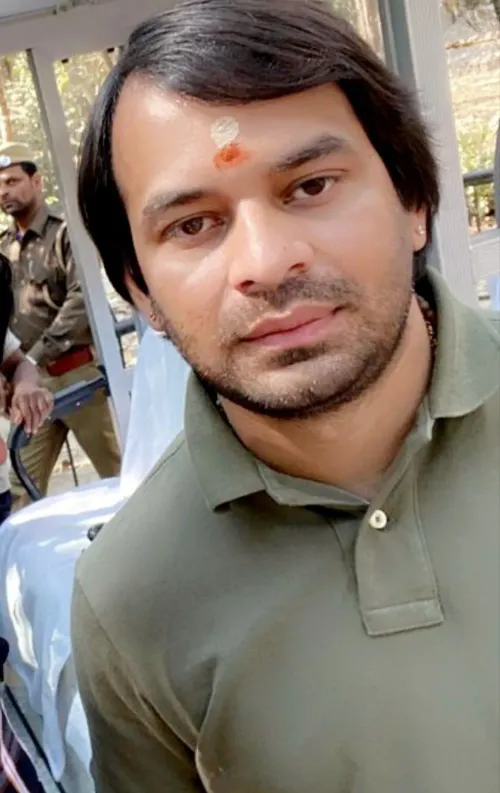
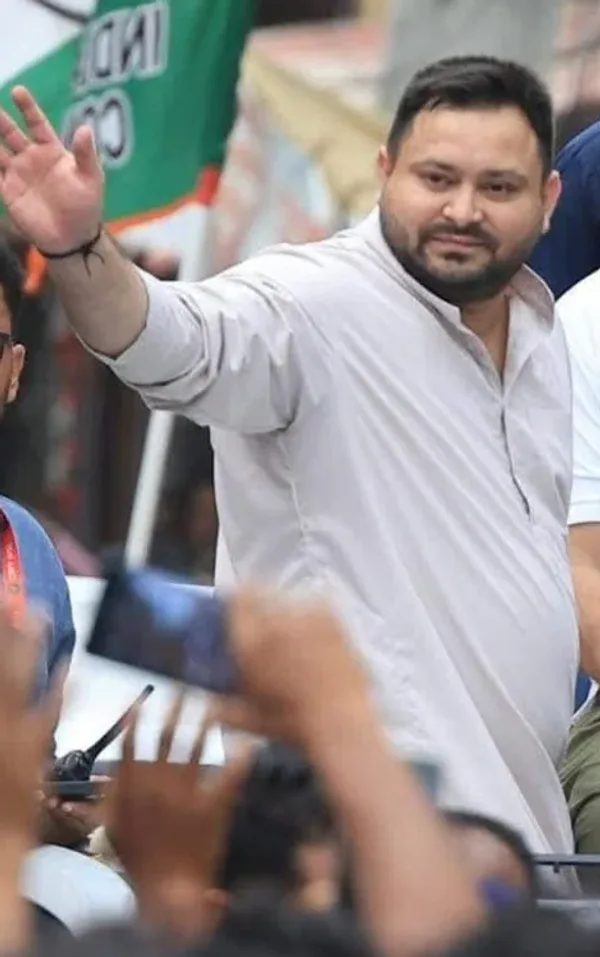
Lalu married Rabri Devi on 1 June 1973. She was sworn in as Chief Minister on 25 July 1997, the day of his resignation, and became the first woman to hold the office in Bihar. She kept the chair through three terms until March 2005, interrupted for seven days in March 2000 when Nitish Kumar replaced her and then handed it back; she was the last chief minister of undivided Bihar, and she went on to lead the opposition in the assembly from November 2005. Lalu and Rabri have nine children, seven daughters and two sons, and several of them are in public life. The sons are Tejashwi Yadav, the younger, and Tej Pratap Yadav, the elder. Tejashwi has been the RJD's frontline figure since 2018, served as Deputy Chief Minister twice, from 2015 to 2017 and from 2022 to 2024, and has led the opposition in the Bihar Legislative Assembly since February 2024. Tej Pratap held Environment and Forests portfolios in the coalition governments of 2015 to 2017 and 2022 to 2024, sat as MLA for Mahua and then for Hasanpur, and was removed from the RJD for six years by Lalu on 25 May 2025, the party president citing irresponsible behaviour and a failure to conform to probity and family values. The next day Lalu posted that his son was expelled from the family as well as the party. Of the daughters, Misa Bharti entered the Rajya Sabha on the party's nomination in 2016 and has represented Pataliputra in the Lok Sabha since June 2024. Rohini Acharya gave her father a kidney at Mount Elizabeth hospital in Singapore in December 2022, during treatment for chronic renal failure. Voters search for that fact constantly. It also became contested: India Today reported on 26 September 2025 that rumours over whether the transplant happened at her hands had moved to the centre of an open quarrel, with Rohini unfollowing the party's and her brother's accounts and blaming the doubts on Tejashwi's aide, the RJD MP Sanjay Yadav, while Tej Pratap publicly backed her. A patriarch severing ties with an elder son in public, and parts of a family fighting each other in the open, belongs to this political record, not to gossip. This profile carries it because the question people arrive asking is who is in the family.
His own last electoral contest came in the 2025 Bihar assembly election, and it was a small one. Lalu stood at Marhaura on the ticket of the Rashtriya Jansambhavna Party, not the party he founded, and result tables published by NDTV and India.com recorded him with 2,820 votes, about 1.6 per cent of the votes cast; the seat was taken by the Rashtriya Janata Dal's candidate, Jitendra Kumar Rai, by a margin of 27,928 votes. The affidavit he filed with that nomination is also the clearest asset evidence on the public record for him. Read through the Association for Democratic Reforms' MyNeta archive it declares assets of about ₹7.84 lakh; The Hindu's candidate record of the same filing puts total assets near ₹13.6 lakh with liabilities at nil, the two readings differing because the outlets aggregated the affidavit's schedules differently. Against his own earlier returns, roughly ₹3.2 crore declared for the 2009 Lok Sabha election and ₹72.90 lakh in the 2020 Bihar election, the declared footprint has shrunk rather than grown. Nothing here supports the figures that circulate on social media: the fact-checker Factly examined viral claims putting his property in the thousands of crores and found no evidence behind them. Where a number for Lalu is quoted without a filing, a court record or a named outlet behind it, treat it as invention.
Lalu's health has been national news since his seventies. The kidney disease that led to the 2022 transplant has kept him between hospitals in Patna, Delhi and Singapore, and those movements have themselves become political events. He returned to active RJD leadership after the custody periods that followed the fodder convictions and remains the party's chief decision-maker and its most powerful campaigner, with Tejashwi carrying the day-to-day frontline. He is at once a patriarch under legal and family strain and the most electorally potent Yadav politician in Bihar.
The Orator, the Style, and the Nitish Equations
Part of Lalu's durability is a style that cannot be separated from the substance. He campaigned and spoke in earthy Bhojpuri and Hindi, joked about his own modest schooling and rural poverty, and made nothing of the manners of the elite governments he had replaced. A scholar of Bihar politics calls what he built vernacular and non-Brahmanical politics, which is as close as the writing gets to a definition. His press conferences and parliamentary speeches worked as popular entertainment at least as much as politics. He turned the chief minister's residence into a venue for kurta far Holi, an occasion on which guests and journalists arrived shouting "Kaha Chhupal hai Lalu Sala" and he answered in the same register. His rallies, called railla, expected men to carry the lathi of a herder, both a symbol of masculinity and a cowkeeper's working tool. On the other side of the ledger sits "bhurabal saaf karo", a slogan reported from his first tenure that takes the initials of Bhumihar, Rajput, Brahmin and Lala, the Kayastha shorthand, and calls for that upper-caste bloc to be cleared out. Critics have spent two decades holding it against him. None of this was cosmetic. It was the public language of a community's sudden self-confidence, and it is why Lalu kept returning from the back benches to the front of Bihar's politics even after conviction and custody.
Voters also search constantly for Lalu's long equation with Nitish Kumar, the Janata Dal (United) leader who has taken the Bihar chief ministership nine times. Allies and opponents have swapped places so often that the sequence has to be stated carefully. Nitish's first government, in March 2000, was the seven-day experiment that briefly displaced Rabri Devi and then returned the chair to her; apart from President's rule and that week the RJD stayed in power in Bihar until 2005. Nitish then governed from November 2005 to 2014 with the BJP, took the JD(U) out of the NDA in June 2013, and in 2015 led the Mahagathbandhan with the RJD and Congress to a landslide that put him back in the chair on 20 November 2015 with Tejashwi as Deputy Chief Minister. That alliance broke before the November 2020 election, which the NDA won, 125 seats to the Mahagathbandhan's 110, with the RJD once more the largest single party at 75. On 9 August 2022 Kumar broke with the BJP and rebuilt the Mahagathbandhan with the RJD and Congress, taking the oath on 10 August with Tejashwi as deputy again. He resigned in January 2024 and rejoined the BJP-led NDA, which ended Tejashwi's second deputy chief ministership and sent the RJD to opposition. Kumar left the chair again in April 2026, when Samrat Choudhary succeeded him, and took a Rajya Sabha seat. Ally or rival, Lalu has never been removable from any arithmetic for a Bihar government, and that is the surest measure of his place in the state.
Political Legacy and Why He Matters to This Archive
Lalu's place in the Yadav story is foundational. If Suryakumar Yadav and Kuldeep Yadav carry the name into world cricket, and Akhilesh Yadav into an Uttar Pradesh chief ministership, Lalu Prasad Yadav built the political model they inherit: the proposition that a community large in numbers and low in ritual rank could capture the state by organising behind its own leadership. Bihar's last three decades cannot be narrated without him on either side of the ledger. The social-justice advance of Mandal and the disputed claim of a Railways recovery sit on one side; the convictions, the custody and the entrenchment of caste arithmetic sit on the other. YadavNews documents that complexity with sources. This profile belongs to a standing effort to record the public, verifiable achievement and the accountability of Yadavs in cricket, in politics and in culture, gathered in the verified guide to notable Yadav personalities and the politicians archive.
How This Profile Was Verified
Every date, office, verdict and family fact on this page was re-checked against named sources this month, not carried over from the last version. Offices and terms come from the records held in the Lalu Prasad Yadav and Nitish Kumar articles, with the Rashtriya Janata Dal succession table for the July 1997 handover and the Rabri Devi article for her terms. Court outcomes are stated only as those records state them, case by case and with dates, and the 2006 acquittal and the 2010 appeal ruling appear here as an acquittal and as a ruling, with nothing added. The Railways section keeps Lalu's claimed surplus apart from the 2011 audit finding about how that surplus was compiled. Family entries are drawn from the Tej Pratap Yadav, Tejashwi Yadav and Misha Bharti articles, and the December 2022 transplant at Mount Elizabeth from the Mohan Foundation report of 6 December 2022, while the 2025 dispute over it comes from India Today's report of 26 September 2025. Four claims that sat on this page have been dropped on that basis: that Lalu held a union communications portfolio in 1989, that he was convicted in the fodder cases during the 2000s, that Rabri Devi served a further term from 2005 to 2014, and that premium train brands were introduced under him, an attribution the record gives to his successor's tenure. One of those four is contradicted outright by Nitish Kumar's tenure from November 2005. Where public claims conflict, most obviously over whether these cases are political or criminal, both accounts are reported and attributed instead of adjudicated. The English Wikipedia article on Lalu now carries an AI-generated-content maintenance notice dated September 2026, so its prose was treated as a lead and only used where its infobox and succession figures are corroborated; Britannica's profile remains our standing third-party cross-check. If any figure here is wrong, the corrections policy explains how to have it fixed, usually within 72 hours of a flag carrying evidence.