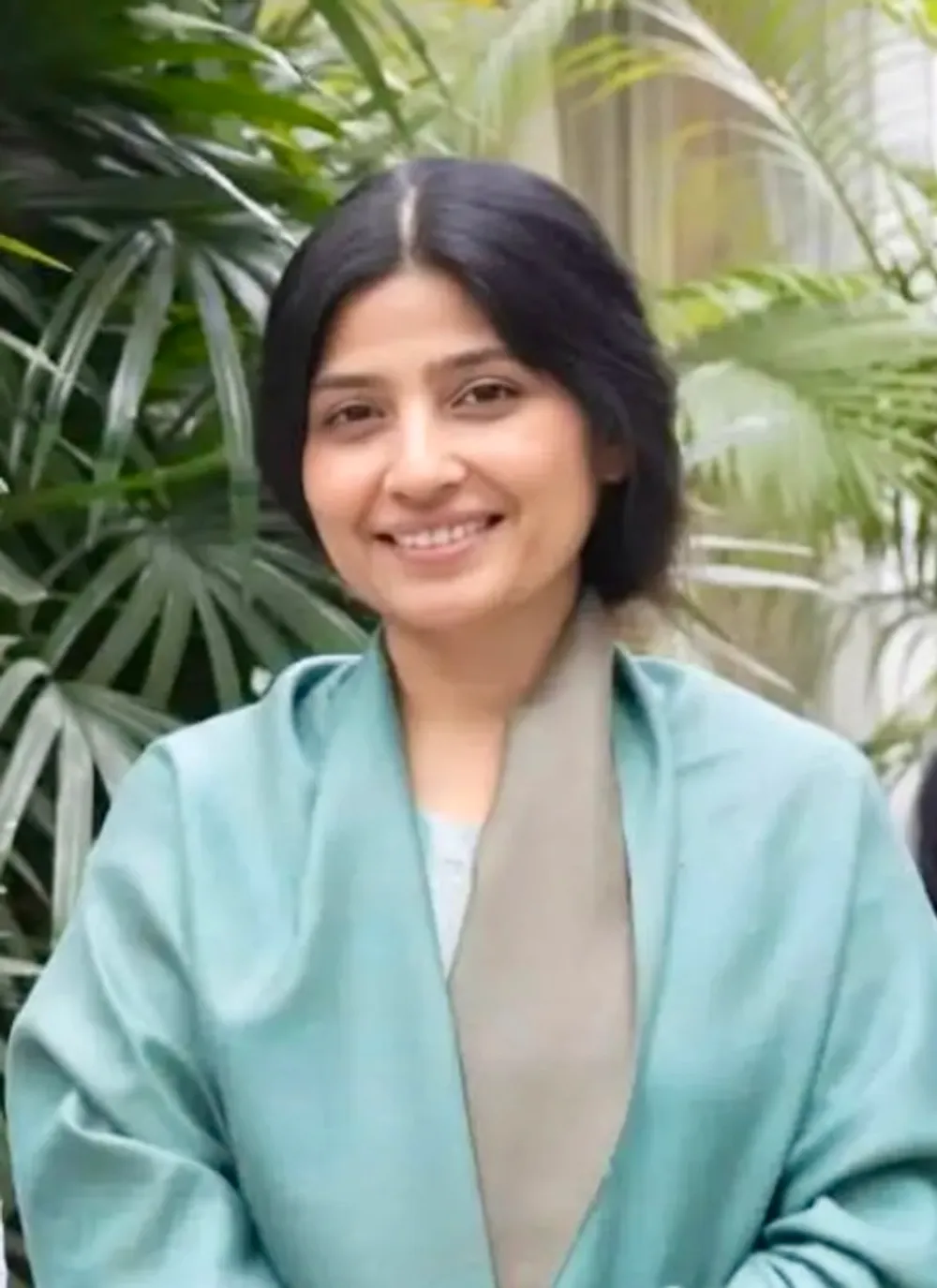
Biography & Career Overview
Dimple Yadav is a four-term Member of Parliament from Uttar Pradesh and, since winning the December 2022 by-election, the member for Mainpuri. She was born Dimple Rawat on 15 January 1978 in Pune, Maharashtra, and took the surname Yadav on her marriage to Akhilesh Yadav on 24 November 1999, a match into the family's home at Saifai in Etawah district, so Rawat is the surname she carried before she entered public life. No source behind this profile records a caste or sub-caste for her, and this page prints none: the section below on her early life sets out how her birth caste and religion became a matter of public litigation anyway, and how her family has answered that. She is the daughter-in-law of Uttar Pradesh's most consequential OBC political dynasty, and on her own electoral record she has won at Mainpuri with margins that few professional politicians in the state can claim. She came into frontline politics through two family successions: the November 2009 Firozabad by-election fought on a seat her husband had won and vacated, and the June 2012 Kannauj by-election triggered when he resigned that seat to remain Chief Minister. Her arc runs from defeat in her first contest at Firozabad in 2009, through election unopposed to the Lok Sabha from Kannauj in 2012, retention of that seat in 2014, a defeat in 2019, and victories from Mainpuri in 2022 and 2024. This profile documents that journey strictly against affidavit-backed electoral records and named news sources, verified as of 4 October 2026.
Early Life and the Mainpuri–Kannauj Axis
Dimple was born Dimple Rawat on 15 January 1978 in Pune, Maharashtra, the daughter of a retired Army officer, Ram Chandra Singh Rawat, and of Champa Rawat, according to NDTV's candidate profile and OneIndia's. Her own nomination papers point the same way: The Hindu's published summary of her 2024 Lok Sabha affidavit records her age as 46, which is a 1978 birth, not the 1975 year that still circulates in aggregators and that an earlier version of this page carried. Published profiles consistently describe her pre-marriage life as deliberately private, and this archive documents only what named sources agree upon. That privacy itself became a political subject. After her marriage, sections of Uttar Pradesh society and press spent years attempting to categorise the woman behind the surname. Her birth caste and religion were litigated in public discourse, a line of questioning her family and defenders have consistently rejected as irrelevant to her electoral record and, more bluntly, as communal dog-whistling. What the surname Yadav does and does not establish about a family is the subject of this archive's guide to the Yadav surname and caste; this profile goes no further than the recorded maiden name. The documented facts of her schooling are uncontested and come from an official source: the member biography published by the Parliament of India records her qualification as B.Com, educated at Lucknow University, and lists her profession on entering the House as social work. Wikipedia and India.com's profile both place her schooling at Army Public School on Nehru Road in Lucknow. The rest of the stable record is this: she married Akhilesh Yadav on 24 November 1999, aged twenty-one, against initial resistance within the family (a reconciliation attributed in published accounts to the approval of Akhilesh's grandmother, Murti Devi) and the couple have three children, a daughter and two sons. For a quarter of a century her public identity was defined by that marriage; the last six years have been spent complicating it.
First Contests: The 2009 Firozabad Defeat and the 2012 Kannauj By-Election
Her first contest was a defeat, and the earlier version of this profile did not record it. In the November 2009 Firozabad Lok Sabha by-election the Samajwadi Party fielded Dimple on a seat her husband had just emptied: Akhilesh Yadav had won both Firozabad and Kannauj in the May 2009 general election, taking Firozabad by 67,301 votes over S. P. Singh Baghel, and chose to keep Kannauj, which forced a bypoll on the other seat. Congress's Raj Babbar beat her. The two published margins for that result disagree, and this page keeps both instead of splitting them: The Hindu put Babbar's margin over her at 85,043 votes, while The Times of India and Rediff reported 85,343. The loss is worth stating plainly because it is the strongest available answer to the charge that she has never been tested - she had fought and lost a contested by-election three years before she first took a seat.
Three years later came the unusual return. She was elected unopposed to the Lok Sabha from Kannauj in June 2012, after Akhilesh Yadav resigned that seat on continuing as Chief Minister following the Samajwadi Party's March 2012 assembly victory, and rival nominations were withdrawn before the scrutiny deadline (NDTV; The Times of India). The vacancy was her husband's, not her father-in-law's: Mulayam Singh Yadav was by then the member for Mainpuri and had nothing to vacate at Kannauj, and the earlier text of this profile, which said otherwise, is wrong on that point. The Election Commission record is unambiguous, and the coverage of the time treated the result as a dynastic hand-me-down, which, procedurally, it was. What the dismissal missed (and what her subsequent record proved) is that unopposed elections do not immunise a politician against accountable ones: Dimple went on to win, lose and fight again in direct contests, an arc almost no other figure of her family generation has walked.
What the Record Shows: Community, Gender and Vote Banks
Two research questions attach to every Yadav profile in this archive, and Dimple's results offer clean evidence on both. First, community arithmetic: Kannauj and Mainpuri are Yadav-influenced constituencies in western Uttar Pradesh, and the Samajwadi Party's social engineering (the OBC–Dalit–Muslim coalition architecture theorised in the Yadav origins long read) runs through both seats. Yet her 2024 total of 598,526 votes at 57.03% cannot be explained by Yadav votes alone; commentators in the 2024 cycle attributed the margin to women-turnout surges and caste-realignment fatigue with the state government as much as to core base, and this profile records that as the balance of informed commentary, not settled science. Second, the gender question: Uttar Pradesh has historically fielded an above-average share of women candidates, many of them dynastic placeholders, and the honest discriminator between a placeholder and a professional is not the surname on the ticket but what happens when the family name is absent from the ballot. Dimple's 2019 defeat, followed not by retirement but by years of floor leadership and a return through a harder contest (the Mainpuri bypoll triggered by Mulayam's death and then a general-election defence of the seat) is the documented answer: the constituency chose her again with the state machinery arrayed against her in 2024. Readers tracking Yadav women's political participation (a recurring search theme this archive answers with evidence) will find no better test case in the state.
Kannauj on Her Own Name: 2014 Victory, 2019 Defeat
In the 2014 general election Dimple Yadav contested Kannauj in a straight fight and won with 488,946 votes, defeating BJP's Subrat Pathak by a margin of over 19,000 votes, her first mandate earned at a polling booth, not by withdrawal. Five years later the same contest ran the other way: in the 2019 Lok Sabha election, riding the wave of the Modi-led BJP's state-wide sweep that cost the Samajwadi Party most of its Uttar Pradesh fortresses, she lost Kannauj to Subrat Pathak. The defeat was politically significant beyond the personal: it was cited within the opposition as evidence that dynasty alone could not hold seats, and it set up the five-year interval in which Dimple worked as a party spokesperson and floor leader for SP MPs, not as an MP herself. Her own reading, expressed in interviews since, frames 2019 as the year the BJP's polarisation machinery outspent and out-organised a rational opposition, a contested interpretation we record as her stated view, not as established fact.
The Return: Mainpuri Bypoll 2022 and General Election 2024
The seat that made the Yadav name returned Dimple to Parliament. Following the death of Mulayam Singh Yadav in October 2022, the Mainpuri Lok Sabha constituency fell vacant, and the Samajwadi Party fielded Dimple in the December 2022 by-election; she won, defeating BJP's Raghuraj Singh, and took her seat as the member for her father-in-law's home constituency, a symbolic transfer of custodianship that the state's political culture reads carefully. In the 2024 general election she contested Mainpuri in her own right and delivered the decisive proof of her recovery: 598,526 votes (57.03% of votes cast), defeating BJP's Jayveer Singh by 221,639 votes, per Election Commission tallies reported by IndiaVotes and MyNeta. A four-term MP who has lost and rebuilt from the same political family's two most emblematic seats, she now ranks among the senior most women members of the Samajwadi Party's parliamentary party, and regularly leads opposition walkouts and floor interventions, most visibly during the July 2026 NEET-paper-leak protests, when she led SP MPs' march from Parliament to Jantar Mantar.
What She Has Declared: The Affidavit Record
Her nomination affidavits are the only financial record published about her, and they are large enough to have become a story in their own right. The Association for Democratic Reforms data mirrored by MyNeta shows her 2024 declaration for Mainpuri at 14,36,05,239 rupees of movable assets and 27,66,56,776 rupees of immovable assets; those two published rows add to 42,02,62,015 rupees, a sum derived here by addition, not quoted from any source. The same mirror puts her earlier declaration at 13,07,50,640 rupees movable and 26,83,99,776 rupees immovable. Press coverage of the 2024 filing reported a much smaller number: NDTV and India Today both described assets worth more than 15 crore rupees, with India Today itemising immovable property above 10.44 crore rupees and movable assets above 5.10 crore rupees. Which columns of an affidavit a report is reading, self, spouse or notional family property, decides figures like this, and we have not been able to establish how each outlet counted, so both readings are printed here and neither is presented as her personal wealth. The single line item coverage led with was jewellery: a declaration of 2,774.674 grams of gold carrying a 127.75-carat diamond valued at 59,76,687 rupees.
Political Style and Standing
Dimple's style is deliberately calibrated against the loudest voices around her: composed floor presence, carefully scripted interventions, and a public image managed to avoid the gaffes that fringe male relatives have supplied in abundance. Within the Samajwadi Party she is understood as a stabiliser, a figure whose name can be fielded where the family brand needs to be asserted without asserting family preference overtly, and whose position as custodian of Mulayam's legacy in his home district carries emotional currency in Mainpuri that no other candidate can claim. Analysts of UP politics note that her electoral record complicates the standard "dynasty" frame in both directions: the platform was inherited, but the 2014 and 2024 mandates were won at the ballot box against named opponents, and the 2019 loss was borne in the manner of a professional. Whether her record ultimately constitutes independent political capital or remains an annuity drawn from the Yadav name is a live question in Uttar Pradesh commentary, this profile presents the documented results and leaves the interpretation to readers. What is documented is the parliamentary visibility she has built since 2022: a regular voice in the Samajwadi Party parliamentary party's floor interventions, and most visibly the lead role in the July 2026 NEET-paper-leak protest march from Parliament to Jantar Mantar, which national outlets including ANI and Press Trust of India covered extensively. That posture (present on the floor, measured in speech, forward in protests the party wants amplified) is the clearest evidence that her post-2022 presence differs in kind from her 2012–2019 one.
Her Place in the Yadav Story: Context, Cross-Links and Sources
Dimple Yadav is the axis on which the Samajwadi Party's most prominent Yadav household meets its own electoral record: daughter-in-law of party founder Mulayam Singh Yadav, wife of former chief minister Akhilesh Yadav, and sister-in-law (by the second, contested marriage of her father-in-law) of the late Prateek Yadav, whose 2026 death our news archive documents separately and with explicit source-conflict notes. The parallel Yadav political tradition from Bihar, led by Lalu Prasad Yadav, frames the wider rise of the community in national politics documented in this archive. The family's internal politics, including the 2017 Samajwadi Party crisis that briefly expelled Akhilesh and reshuffled the succession question, is beyond this profile's scope except where it touches her electoral record. For the community dimension, the guide to notable Yadav personalities and the verified history of the Yadav community's origins supply the documented backdrop against which surnames like hers carry political weight in the Hindi heartland; the politicians hub gathers the archive's political profiles. Where any claim here is disputed, the corrections policy explains our resolution process; a continuously maintained third-party summary exists at her Wikipedia page, though our working numbers come from Election Commission affidavit data mirrored by MyNeta and reported by named outlets.
How to Read a Dynastic Career Honestly
A short methodological note, because Dimple Yadav invites lazy takes in both directions, hagiography from partisans and dismissal from critics. The honest frame holds two truths at once: opportunity in Indian politics is massively unequal, and a candidate who enters Parliament at thirty-four through an unopposed by-election on a family name, having already lost one seat on that same name, received a head start that millions of qualified citizens never will; equally, the Indian ballot is genuinely competitive, and this particular beneficiary of dynasty lost a hotly-contested seat in 2019 and won a different one twice afterward against ruling-party machinery. Neither fact cancels the other. Readers should weigh her record the way we weigh any MP's: vote margins, constituency work visibility, floor performance, and the positions she has taken in the Lok Sabha, which we report as her declarations, not as findings. This archive's purpose in documenting such careers is precisely to keep the inherited platform and the earned mandate in separate columns of the same ledger.
How This Profile Was Verified
Every electoral fact above, the 2009 Firozabad defeat, the 2012 unopposed return, the 2014 margin and vote totals, the 2019 result, the December 2022 bypoll victory and the 2024 result (598,526 votes, 57.03%, margin 221,639 over Jayveer Singh), reconciles against Election Commission affidavit data as mirrored by MyNeta and IndiaVotes, and against contemporaneous reporting from NDTV, The Times of India, The Hindu, The Indian Express, The Print, Business Standard, India Today and Scroll.in. Her birth date and place, her parents' names, her schooling and her commerce degree come from the Parliament of India member biography, from The Hindu's summary of her 2024 affidavit, and from NDTV's and OneIndia's candidate profiles, all read again on 4 October 2026. That work corrected four errors carried by an earlier version of this page: a 1975 birth year and an Uttar Pradesh birth place, a marriage at twenty-four instead of twenty-one, an entry to Parliament at twenty-nine instead of thirty-four, and the attribution of the 2012 Kannauj vacancy to Mulayam Singh Yadav when it was created by Akhilesh Yadav's resignation. The 2009 Firozabad contest, which that version omitted entirely, is now recorded. Three disagreements are left open, not averaged: Babbar's 2009 margin (85,043 votes in The Hindu against 85,343 in The Times of India and Rediff), the 2024 asset total (the ADR mirror's combined figure against the 15-crore-rupee reading in NDTV and India Today), and the 1975 birth year still repeated by aggregators against the affidavit age. Two fields are deliberately empty. Nothing in the record reviewed for this revision documents a civilian award or state honour for her, so this page prints none, whatever commemorative claims have been made since. And her children are not published at any length: they are private individuals, the family has kept them out of public life, and the three-children count is as far as this record goes. Marriage date and family details follow Wikipedia's cited account and long-standing newsroom profiles; birth caste queries are addressed only as a documented public phenomenon, with no personal data published. Statements about internal Samajwadi Party standing are attributed to named analyst commentary or flagged as interpretation. Where an outside source disagrees with our record, the corrections policy explains how we resolve it.
FAQ-Summary Reading
Readers who want the shortest honest version: Dimple Yadav is a four-term MP from the two most emblematic Samajwadi Party seats in western Uttar Pradesh, born Dimple Rawat in Pune, drawn into frontline politics by her family's succession needs, not by her own first choice, defeated in her first contest in 2009 and again on a national wave in 2019, and returned twice with enlarged personal margins. Her career is the cleanest available test case for whether inherited political capital can be converted into independently verifiable electoral strength, and, so far, the ballots say it can, with the 2009 and 2019 defeats as the standing reminders of the limits.