Biography & Career Overview
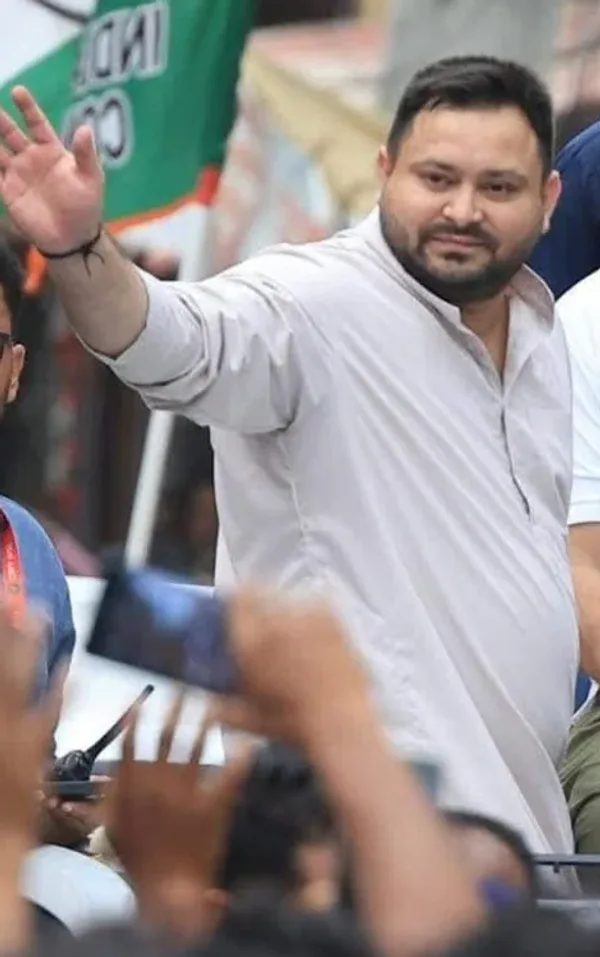
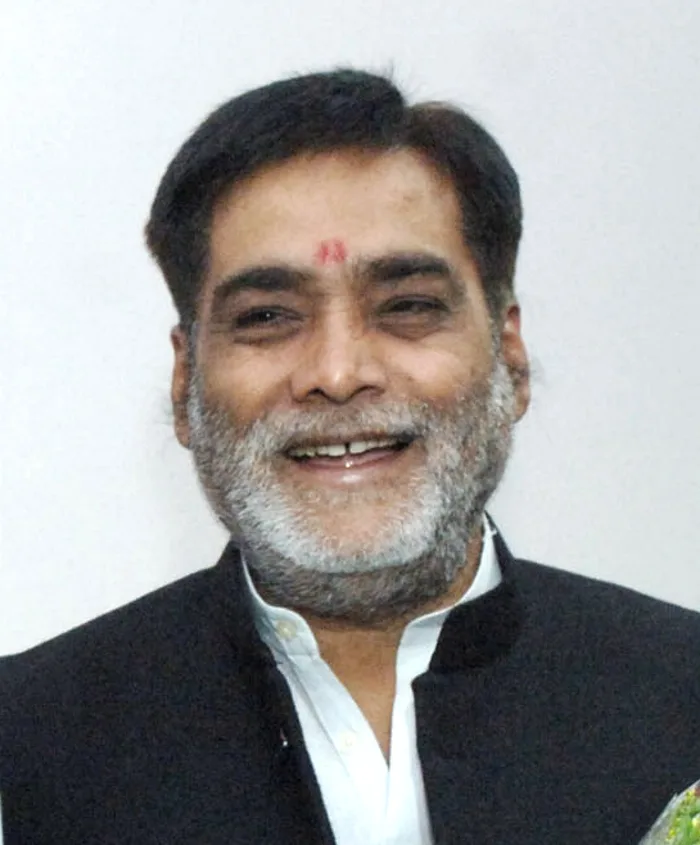
Ram Kripal Yadav (born 12 October 1957) is a politician in Bihar who has sat in the Lok Sabha five times, in the Rajya Sabha once, in the Bihar Legislative Council twice and, since 14 November 2025, in the Bihar Legislative Assembly. He represented Patna in the lower house from 1993 to 1996 and again from 2004 to 2009, and Pataliputra from 2014 to 2024. In the first Modi ministry he held minister of state rank, first in Drinking Water and Sanitation from 9 November 2014 and then in Rural Development from 5 July 2016 until the end of that government. Back in Bihar he took the Agriculture portfolio in the tenth Nitish Kumar ministry on 20 November 2025 and was given Co-operative in the Samrat Choudhary ministry on 7 May 2026.
Two features give the record its shape. The first is length. His first win in a Lok Sabha re-election came in 1993 and his most recent victory, in an assembly contest, came thirty-two years later; between those dates the published returns show nine contests, six won and three lost. The second is the party change of March 2014. Until then he had been a Janata Dal, and then Rashtriya Janata Dal, functionary who came up in Patna municipal politics and who stood aside in 2009 so that Lalu Prasad Yadav could contest the new Pataliputra seat himself. Yadav joined the Bharatiya Janata Party on 12 March 2014 and won Pataliputra in the general election that followed, defeating Lalu's daughter Misa Bharti by 40,322 votes. She defeated him in 2024 by 85,174.
This archive carries the profile because he is one of the few Bihari politicians whose entire career can be traced through published election returns, and because his case puts a specific question on the record: what happens to a career built inside one party when that party's leader denies a ticket. The answers here come from the Commission's own constituency tables, from the Parliament of India's biographical record, from six election affidavits, and from reported statements he made in 2014 and in 2024. Where those documents disagree with each other, or with what the newspapers printed, this page records the disagreement instead of choosing a comfortable number.
Patna, 1957 to 1978
The English Wikipedia article gives his birth as 12 October 1957 at Patna in Bihar, and his education as a Bachelor of Arts with honours and a Bachelor of Law from Magadh University. The Hindi Wikipedia article on him adds a village, Sabhar-Chak, to the place of birth. His election affidavits describe the schooling differently and in fewer words: the return filed in 2019 records Matriculation in 1974 and graduation from Magadh University in 1978, and the 2025 return names A.N. College, Patna, affiliated to Magadh University, with the year 1978. An honours degree and a law degree are two qualifications; the affidavits record one graduation year. No consulted document reconciles them.
The PTI profile published when he entered the Modi ministry in November 2014 adds two biographical details that appear nowhere else in the material read for this page: that his father, Kishori Prasad Yadav, died while he was young, and that his childhood was difficult as a result. The same profile gives his date of birth as 12 October 1957, which matches the article and the affidavits. The 2025 affidavit writes the father's name with the honorific Late, consistent with that account.
Fair price shops, a ward, and the deputy mayor's chair
The earliest office on his own list is municipal. The Offices held table in the Wikipedia article begins with Deputy Mayor of the Patna Municipal Corporation for 1985 and 1986. The Firstpost profile from March 2014, drawing on a Telegraph account, describes the road to that chair through the ration trade and ward politics: a fair price shop, then a ward, then the corporation. Those two steps have no official record attached to them and are reported here on the strength of that article.
The same lead sentence in the Wikipedia article says he "was first a mayor in Bihar", which conflicts with the table beneath it and with every other consulted source, all of which say deputy mayor. This profile follows the table. Patna's corporation has had its own mayor for the whole period in question, and no source names him as mayor.
1993: the re-election won on a Janata Dal ticket
Patna returned Shailendra Nath Shrivastava of the Bharatiya Janata Party in 1989 with 1,87,666 votes at 30.2 per cent, ahead of the Congress's C. P. Thakur on 1,66,073 and the Communist Party of India's Ram Nath Yadav on 1,55,224, a margin of 21,593 out of a turnout of 6,43,303. The 1991 general election at Patna was then countermanded for violence, and no member was returned for that term; the Janata Dal had fielded Inder Kumar Gujral there and the Janata Party had fielded Yashwant Sinha.
The re-election, held in 1993, was his first victory in the lower house. On the Commission's table for the seat, the Janata Dal candidate Ram Kripal Yadav took 3,39,563 votes at 53.43 per cent and Shrivastava, again standing for the BJP, took 1,79,620 at 28.26 per cent. The majority of 1,59,943 is the difference between those two totals exactly, and it is the largest margin of his career. Turnout was 6,35,422. He had meanwhile been returned to the Bihar Legislative Council for 1992 and 1993, so the two mandates overlapped by a year.
1996: a second term by 39,467
Three years later the same seat produced a much closer result. Ram Kripal Yadav, still on the Janata Dal ticket, took 3,88,513 votes at 50.18 per cent; the BJP's candidate, recorded on the table as S. N. Arya, took 3,49,046 at 45.08 per cent. The margin of 39,467 is again the exact difference between the two totals. Turnout rose to 7,81,874. He was re-elected to what the article calls the 11th Lok Sabha, and his own list of offices dates that term as beginning in 1996.
1998: a countermanded poll, then four years out
The 1998 general election at Patna was countermanded, this time over reports of widespread rigging, and a re-election followed. That by-election is where his winning run stopped. The BJP's C. P. Thakur took 3,31,860 votes at 51.55 per cent and Ram Kripal Yadav, now standing for the Rashtriya Janata Dal, took 2,79,254 at 43.38 per cent, a difference of 52,606 on a turnout of 6,54,670. The next general election went the same way and by a similar distance: in 1999 Thakur took 3,79,370 at 47.3 per cent against Yadav's 3,32,478 at 41.45 per cent, a margin of 46,892 out of 8,12,307 votes cast.
Those four years were not a gap in his working life. He was returned to the Bihar Legislative Council for 1998 to 2004, and from 1998 to 2005 he chaired the Bihar Dharmik Nayas Parishad, a post his own list of offices records as carrying the rank of a state cabinet minister. He has also chaired the Dr. Ambedkar Institute of Sports and Culture in Bihar, a position his article lists without dates.
The RJD years, and the description Lalu's associates used
The Rashtriya Janata Dal was formed on 5 July 1997, when Lalu Prasad Yadav took his faction out of the Janata Dal; Rabri Devi was sworn in as chief minister three weeks later. Yadav's own affiliation line runs Janata Dal, then RJD until March 2014, so the switch came with the split, not before it. What the 2014 reportage adds is a description of the office he held inside the party and the function he performed in it. The Hindu, publishing on 12 March 2014, writes in its own text that he "has been the RJD general secretary for the last 17 years"; the paper credits the welcome into the BJP to its president Rajnath Singh and puts no such words in Singh's mouth. Seventeen years is a longer span than the RJD had then existed, since Lalu Prasad Yadav took his faction out of the Janata Dal on 5 July 1997 and Yadav left in March 2014, sixteen years and eight months later. The Times of India a week earlier calls him "also party general secretary" without dating the tenure, and the Rediff interview from the 2024 campaign describes him as having entered politics in the early 1990s. Firstpost, drawing on The Telegraph, described him as the bridge between party workers and Lalu, and reported that he stayed with the RJD when nineteen of its leaders went to Nitish Kumar's Janata Dal (United) in 2005. The New Indian Express, carrying a PTI profile on the day he took ministerial office in 2014, reported that supporters of Lalu called him his "Hanuman". Each of those is somebody else's characterisation, and this page prints them as such.
2004: the return, and four committee appointments
In the 2004 general election he took Patna back for the RJD with 4,33,853 votes at 48.12 per cent, defeating Thakur, who polled 3,95,291 at 43.84 per cent. The margin was 38,562, the turnout 9,01,558, and the seat changed hands from the BJP. That made it his third term in the lower house, and the Parliament's biographical record for the 14th Lok Sabha lists the committee work he did in it: the Standing Committee on Information Technology, the Committee on Security in Parliament Complex, the Standing Committee on Petroleum and Natural Gas from 5 August 2007, and the Committee on Public Undertakings from 1 May 2008. He did not hold ministerial office in the UPA government formed after that election, which the PTI profile notes as unusual for a three-term member.
2009: the seat given up for Lalu
Patna was abolished at delimitation before the 2009 election and split into Pataliputra and Patna Sahib. The new Pataliputra seat was created for Lalu Prasad Yadav to contest, and Yadav stood aside; the article states plainly that he did not contest the 15th general election because the party president was on the ballot there. The result went against Lalu. Ranjan Prasad Yadav of the Janata Dal (United) took 269,298 votes at 42.86 per cent to Lalu's 245,757 at 39.12 per cent, a margin of 23,541 on a turnout of only 628,283, or 41.17 per cent. Five years later, in March 2014, the same Ranjan Prasad Yadav finished third in Pataliputra with 97,228 votes.
Rajya Sabha, 8 July 2010 to 16 May 2014
He went to the Council of States from Bihar in July 2010 and sat there until he resigned the seat to take his Lok Sabha election seat in May 2014. The article's list for those years records membership of the Committee on Defence and of the Consultative Committee for the Ministry of Coal and the Ministry of Statistics and Programme Implementation, both dated 2010. Four years in the upper house, with no ministerial post and no widely reported speech, is the thinnest stretch of his public record, and this page does not attempt to fill it. The infobox names Sharad Yadav as the member who succeeded him in that seat. Sharad Yadav was returned from Bihar to the Rajya Sabha in June 2014, so the sequence is plausible, but the sources consulted here do not tie the two dates to one another.
March 2014: denied the ticket, then the party
The Times of India reported on 7 March 2014 that he had apologised for missing Misa Bharti, who had waited nearly five hours at the Delhi residence for the uncle she had come to see. In that account he spoke to her by phone afterwards and accepted her offer to leave Pataliputra to him, while Lalu Prasad Yadav announced her name for the seat the same week. He had wanted the reversal announced by the party president in person, and it was not. The Hindustan Times set out the same week in more detail: the party president sent his daughter to Delhi on the Friday to talk him down, he refused to meet her, she passed word that she would give up all claims to the seat, he accepted late on the Friday and flew back to Patna, and was then told that horses could not be changed midstream. That paper recorded him breaking down twice at the press conference at which he resigned his party posts.
His own words from that conference are carried by the Hindustan Times. "I thought the party believed in social justice. But I know, it can go to any extent to fulfil family justice, the reason why I leave today," he said. Then: "I gave my life to build this party and stuck with it through thick and thin, when others left. I have fought for the same seat five times in a row, won it three times. The party indeed honoured me. But this time, it went too far in not even consulting me on seat allocation. I could take it no more." The claim about the seat is checkable and correct: Patna returned him in 1993 and 1996, threw him out in the 1998 re-election and in 1999, and gave it back to him in 2004, five contests and three wins. The same paper had him saying that sending his niece to reason with him now looked like a plan to blackmail him emotionally, and that a simple man who does not own a home despite decades in politics found it hard to take. The Indian Express carried Misa Bharti's reply on 9 March, that he had not told the whole truth, that he had sat on the party's parliamentary board which took the call on candidates, and that she was hurt because he "did not bother to respect a woman's sentiments"; the paper wrote that the RJD then shut its doors to him. BJP sources told it the seat had already been promised to Nawal Kishore Yadav, a former RJD member of the state council who had recently joined, and that a formula was being worked out to take both.
He joined the Bharatiya Janata Party in New Delhi on Wednesday 12 March 2014, which The Hindu reported that afternoon with the party president Rajnath Singh and Ravi Shankar Prasad present. He called the move ideological in that paper's account: "The RJD has moved away from its core values. Mr. Prasad gave precedence to his family over party and cadres. I was in a dilemma on what to do for the last few days and then decided to quit the party and join the BJP for the sake of promoting social justice." He pointed to Narendra Modi's rise from party worker to prime ministerial candidate as proof of how open the BJP ran, and asked why he should not support a man whose father sold tea and whose mother worked in other people's houses. The Hindu described him as a key contender for Pataliputra, the seat the RJD had by then given to Lalu Prasad Yadav's daughter. Firstpost ran a profile the same afternoon that reached back to The Telegraph's account of a fair price shop owner working up from ward politics, called him the bridge between party workers and Lalu, and set out the chronology that has him in the state council from 1992 and in the Lok Sabha from 1993. When he took ministerial office eight months later, Firstpost's reshuffle piece put the switch down to his former chief's preference for his own family and had him endorsing Narendra Modi as "the man India is looking up to", after nearly three decades with Lalu Prasad Yadav.
Pataliputra 2014: 40,322 votes
The Commission's table for Pataliputra in 2014 gives Ram Kripal Yadav 383,262 votes at 39.16 per cent and Misa Bharti 342,940 at 35.04 per cent. Ranjan Prasad Yadav took 97,228 for the JD(U), Rameshwar Prasad 51,623 for the CPI(M-L) Liberation, Raj Kumar Ram 17,188 for the Bahujan Samaj Party, and 4,678 voters chose None of the Above. The majority was 40,322, or 4.12 per cent, on a turnout of 978,795 votes, which was 56.38 per cent of the electorate. The table records the seat as a BJP gain from the JD(U) on a swing of 3.70. Those six printed lines account for 896,919 of the votes cast, so roughly 82,000 went to candidates the constituency page does not list. In 2014 a man weeks into a new party won the seat on under 40 per cent of the votes, and the candidate he beat carried the surname of the family he had just left.
Minister of state, November 2014 to May 2019
He was sworn in as Minister of State in Drinking Water and Sanitation on 9 November 2014, six months after the election. Uma Bharati held the independent charge of that ministry. The PTI profile published that week, in the New Indian Express, counted the oddity out loud: after a career stretching back to municipal politics he had never held office in Bihar or at the Centre, even while the RJD sat inside the United Progressive Alliance with half a dozen of its own ministers. On 5 July 2016 he moved, at the same rank, to Rural Development under Narendra Singh Tomar, and stayed there until the government ended. His own list of offices dates the Rural Development charge to 25 May 2019 while the infobox dates the whole ministership to 30 May 2019; both are defensible readings of when a council of ministers ceases, and this page prints the difference. It was his first ministerial office at any level after twenty-one years in elected politics.
His time at the water ministry is mostly on record as a quarrel with the government of Bihar. Reporting from Chhapra on 9 June 2015, the Times of India had him alleging that the state was obstructing a pipeline water supply scheme, that a World Bank fund of 1,000 crore rupees for clean drinking water in districts including Patna was going unused, and that 600 crore rupees the Union had released to the state in the previous year had produced unsatisfactory progress. He said Nitish Kumar spent most of his time criticising the Union government instead of working on schemes for the public. At a separate meeting of BJP workers across Saran's assembly segments the same day he said he had devoted about 30 years to the service of Lalu Prasad Yadav, who had never reciprocated, and that a man who had failed to be honest with him could not be honest with anyone except his own family. The paper's own reported speech slips between first and third person in that passage, and the sentence is quoted here as the paper printed it. Thirty years in 2015 puts his political start in the mid-1980s, which fits the municipal record and not the seventeen years the party office was said to cover.
In the 16th Lok Sabha he also sat on the Committee on Estimates from 14 August 2014, and on the Standing Committee on Science and Technology and on Environment and Forests, and on the Consultative Committee for Railways, both from 1 September 2014 until the ministerial appointment on 9 November that year.
2019: retention by 39,321, and an e-rickshaw
He held Pataliputra again in 2019, taking 509,557 votes at 47.28 per cent against Misa Bharti's 470,236 at 43.63 per cent. The margin was 39,321, a thousand votes short of the 2014 distance in absolute terms and smaller as a share, 3.65 per cent against 4.12. Turnout was 10,78,809 at 56.03 per cent. Mohammad Kalimullah took 14,045 for the BSP, Shailesh Kumar 9,628 for BAAP and Shiv Kumar Singh 8,354 for APKSP, both of those printed on the table as bare abbreviations, and 6,576 voters chose None of the Above. The six lines account for 1,018,396 of the votes cast.
What his own case work looked like is described at length in a Rediff interview from the 2024 campaign, which is the only consulted source that watched him at the work itself instead of printing what he said about it. A visitor waited three hours at his home in Patna; some twenty people were inside the verandah and courtyard and more packed into a single-opening passage where the member was being pushed back against the wall by the crowd. An assistant kept saying he would meet each one of them. A man with a bandaged forehead waited two and a half hours about a police station that would not act on his first information report from an assault four months earlier and a second attack the day before; Yadav telephoned the divisional supervisor, told him the man was coming back, and said he would not tolerate his workers being beaten with no action taken. The headline of that piece carries his own line, that Bihar will not be fooled by Lalu's family, and it quotes a school principal in Anisabad who invited him twice expecting no answer and got him at both functions. Rediff calls him a grassroot politician who entered politics in the early 1990s.
That campaign produced the single most widely carried story about him in his fourth and fifth terms. On 31 March 2019 the Hindi daily Jansatta reported, and Business Standard and the New Indian Express repeated, that the Union minister had been seen driving an e-rickshaw on Patna's roads in the morning, to the astonishment of the people waiting at the stops. It was an item of theatre, not policy, and it is the only act from his five years as a minister of state that reached a national news desk in the sources read here.
For the 17th Lok Sabha, the biographical record lists four appointments: the Public Accounts Committee from 24 July 2019, the Standing Committee on Agriculture from 13 September 2019, the Committee on Subordinate Legislation from 9 October 2019, and the Consultative Committee for the Ministry of Petroleum and Natural Gas, also from 9 October 2019, all running to 4 June 2024.
2024: the defeat, and the shooting at Tineri
In the 2024 general election Misa Bharti took Pataliputra with 613,283 votes at 49.86 per cent, against 528,109 at 42.93 per cent for Ram Kripal Yadav. The margin of 85,174 is larger than the two distances by which he had beaten her, 40,322 in 2014 and 39,321 in 2019, added together, which come to 79,643. Turnout rose to 1,230,694, or 59.15 per cent. The constituency page prints three lines for that contest, the two principals and the 5,606 votes marked None of the Above, and those cover 1,146,998 of the votes cast; the remainder went to candidates that page does not list.
On 1 June 2024, the seventh and last polling phase in Bihar, his convoy was fired at in the evening after the booths closed. PTI, carried by NDTV the same night, put the attack near Tineri village in the Masaurhi area of Patna district at about 7.30 pm, with the superintendent of police Bharat Soni reporting that unknown persons had shot at the vehicles and that a written complaint had been filed. ANI published his own account the next day: he had gone to the Kineri polling station on hearing that voting was being disrupted there, and three or four shots were fired at him as he left it. "I kept moving. Then my supporters began protesting," he told that paper, and added, "Never in my life did I imagine that something like this could happen. They are trying to destroy democracy with a revolver, but they won't succeed." He named the RJD as responsible and said its workers were behind the attack, which was his accusation, not a police finding. The New Indian Express reported on 3 June that a special investigation team had been formed, that nine people were named in the first information report, which Yadav himself had lodged, and that the team had arrested one of those named, Vikas Yadav. The same paper had him saying he had never faced such a situation in forty years of public life and that this was the first time he had filed a complaint against anyone, and recorded his allegation that the RJD assembly member Rekha Devi had entered a polling booth during the voting, on which he said he had complained to the district magistrate and district returning officer, Shirsat Kapil Ashok. Two accounts also describe supporters being beaten on the way back, one of them in the head. The village is Tineri in PTI's report and Kineri in his own, and both are printed as spoken. Nothing consulted before 2 October 2026 carries a charge sheet, trial or court finding in the shooting, and this profile does not say who fired.
Danapur 2025, and two Bihar portfolios
The Election Commission announced the schedule for the 2025 Bihar assembly election on 6 October 2025 and declared the results on 14 November 2025. The BJP-led National Democratic Alliance took 202 of the 243 seats and turnout statewide was 67.25 per cent. In Danapur, assembly constituency number 186 with 3,76,759 electors, Ram Kripal Yadav took 119,877 votes at 54.41 per cent. Ritlal Yadav of the RJD came second on 90,744 at 41.19 per cent, Shailesh K. R. Dhiraj took 2,786 as an independent and 3,242 voters chose None of the Above. The margin was 29,133, or 13.22 per cent, on a turnout of 220,307, which is 58.47 per cent of the roll. The table records a BJP gain from the RJD with a swing of 14.55, measured against the 39.86 per cent the BJP's Asha Devi Sinha had taken there in 2020.
Ritlal Yadav had taken the seat in 2020 with 89,895 votes, and before him Asha Devi Sinha held it from 2005. Danapur was also the assembly seat Lalu Prasad Yadav won in 1995 and in 2000, which makes the 2025 result a change of hands on ground that had been emblematic, and not incidental. He was sworn in as a minister of the Government of Bihar on 20 November 2025 in the tenth Nitish Kumar ministry, with Agriculture allotted to him when the portfolios were distributed on 21 November; that ministry ended on 14 April 2026, and the Wikipedia infobox for him gives the end date as 15 April 2026. He was succeeded in Agriculture by Samrat Choudhary, who became chief minister on that date. On 7 May 2026, in the new ministry, Yadav was given the Co-operative Department, taking it from Choudhary, who had held it himself.
What the affidavits declare
Six sets of election papers by him are readable in the Association for Democratic Reforms' MyNeta archive or in reporting of that archive, and they are the closest thing to a self-published financial history that Indian elections produce. The declared assets rise in almost every contest: 14,00,031 rupees for the 2004 Lok Sabha election, 30,62,726 rupees in his Rajya Sabha papers, 1,39,89,431 rupees in 2014, 2,92,13,467 rupees in 2019, 3,24,78,104 rupees in 2024, and 3,51,44,091 rupees for the Danapur contest in 2025. Liabilities move the other way, from 17,17,310 rupees in 2019 to Nil in 2025. Declared income in the 2019 papers was 6,09,308 rupees for 2018-19 and in the 2025 papers 10,89,120 rupees for 2024-25, figures that sit low beside an asset total of the size declared.
The criminal case column is the one that changes. The 2004 return declares no case. The Rajya Sabha papers declare two. The 2014 return declares one. The 2019 return declares none. The 2024 return declares two, and the 2025 return declares two. The 2019 and 2025 papers also give his education in the compressed form described above, and both record his own profession as social worker and his spouse's as housewife. Bankipur, assembly constituency 182 in Patna, holds his roll entry in both: serial 588 in part 136 in 2019 and serial 529 in part 157 in 2025. The age column does not agree with the birthday. The MyNeta pages give him as 53 in the 2014 papers, 58 in 2019 and 64 in 2025, which sets his birth year at about 1960 or 1961 on all three occasions, and the English article, the Hindi article and the PTI profile all say 12 October 1957. Candidates fill in the age themselves, so the affidavits are his own statement about it and the 1957 date is somebody else's. Both are printed here and neither is resolved. A declaration in an affidavit is not a finding by a court, and nothing here treats it as one; the cases are listed because the law requires candidates to publish them and readers are entitled to the same table the Election Commission got.
The Yadav name, and what it has meant in Bihar
The Wikipedia entry on the Yadav name describes it as a grouping of non-elite peasant and pastoral castes across north and central India that adopted the label in the nineteenth and twentieth centuries as a claim of descent from the mythological king Yadu; the historian Christophe Jaffrelot is quoted there explaining that one term covers castes carrying different names in different regions, Ahir across much of the Hindi belt. The entry also records how pastoral castes were subsumed under the generic Yadava label through caste sabha decisions around the 1931 census. Bihar is the state where that consolidation turned into an electoral force, and the Rashtriya Janata Dal is its oldest surviving vehicle.
Against that background, Yadav's own position in the record is procedural, not symbolic. He is a member of a party founded on the political assertion of the backward classes who left it for the Bharatiya Janata Party, and who has twice faced, and once lost to, the family of the man he describes as having put family before cadre. No consulted source describes his sub-caste, and no campaign built on community mobilisation is attributed to him in the material read here. A surname plus five parliamentary terms is not a community history, and this archive will not imply one.
What the record amounts to
Measurable things first. Nine direct contests produced six wins and three defeats, and the wins came under three party labels, Janata Dal in 1993 and 1996, the RJD in 2004, and the BJP in 2014, in 2019 and in 2025. Vote shares on the Commission's tables run from 39.16 per cent, his lowest ever, to 54.41 per cent at Danapur. He held minister of state rank in two Union ministries for four years and six months, and has held two state cabinet portfolios since November 2025. Sixteen years and eight months elapsed between the founding of the Rashtriya Janata Dal and the day he left it, and every mandate he won inside that window came on its ticket. Declared assets in his own papers rose from 14 lakh rupees in 2004 to 3.51 crore in 2025.
What makes the career worth a page is the sequence, not the tally. He built his position as the link between a party's workers and its president, gave up a seat for that president in 2009, was denied one by that president's family in 2014, joined the president's oldest rival, beat the daughter twice and then lost to her by a wider margin than either of his wins, took a shooting he has never stopped talking about, and finished in a state cabinet in the year he turned sixty-eight. Two of those steps, the 1998 countermand and the 2024 attack, were decided by other people. The rest were choices he made on the record.
Sources read for this profile
The electoral spine is official or reproduced from official tables. Lok Sabha results for Patna in 1989, in 1993, in 1996, in 1998, in 1999 and in 2004, for Pataliputra in 2009, in 2014, in 2019 and in 2024, and for the Danapur assembly seat in 2020 and in 2025 come from the Wikipedia constituency articles, whose own citations are Commission returns; every margin in this profile was re-subtracted by hand from the printed totals and matches the majority line. The statewide 2025 figures come from the same source. Committee appointments, terms in the two houses, portfolio dates and the list of offices come from the English Wikipedia article on him and from the Lok Sabha biographical profile it cites. The First Modi ministry table supplied the names of the ministers of whom he was the junior.
Personal details come from that article, from the Hindi edition of the same article for the village, and from a PTI profile published on 9 November 2014. Affidavit figures come from the MyNeta pages for the 2014 and 2019 Pataliputra contests and the 2025 Danapur contest, the last of which also tabulates the earlier declarations. The 2014 party switch rests on the Times of India of 7 March, the Hindustan Times of 8 March, the Indian Express of 9 March and The Hindu of 12 March 2014, with Firstpost the same day supplying the earlier career and its reshuffle piece of 10 November adding his own words about Narendra Modi. The 2024 attack rests on PTI through NDTV on 1 June 2024, ANI on 2 June and the New Indian Express on 3 June 2024. The 2019 e-rickshaw story is from Jansatta, Business Standard and the New Indian Express of 31 March 2019. Community background is from the Wikipedia entry on the Yadav name, and RJD history from that party's article.
Unresolved points, stated plainly
- Education. The article gives B.A. (Hons) and LL.B. from Magadh University. The 2019 and 2025 affidavits give only Graduate, from A.N. College, Patna, through Magadh University in 1978, with Matriculation in 1974. The Hindi article's own chronology is impossible on those dates and is not used.
- Place of birth. Patna in the English article; Patna plus the village of Sabhar-Chak in the Hindi article.
- Mayor or deputy mayor. His Offices held table and every consulted news source say Deputy Mayor of the Patna Municipal Corporation. The English article's own first paragraph says he was "first a mayor", which no other document supports, and the table is followed here.
- Which years the deputy mayoralty fell in. The article's table and the India Today topic page give 1985 and 1986. The PTI profile the New Indian Express carried in November 2014, and the Hindustan Times account published when he won Danapur in 2025, both give 1992 to 1993. A seven-year gap separates the two accounts and nothing in the Corporation's own published record was reachable to settle it, so the earlier pair is used above and the later pair is recorded here.
- Years in the state council. The table gives 1992 to 1993 and 1998 to 2004, which India Today repeats. PTI and the Hindustan Times give one spell, 1993 to 1996, sitting inside his first Lok Sabha term. Firstpost's chronology has him entering the council in 1992 and winning the 1993 by-election, matching the table's first spell. The 1998 to 2004 term is not disputed. No source explains the overlap of a council seat and a parliamentary seat in the same years.
- Which year he won in 1991 or 1997. The English article's own summary places his Patna wins in 1991, in 1996 and in 2004, but the 1991 poll at Patna was countermanded and the Commission's table shows the win as the 1993 re-election. Firstpost's profile says he won in "1997", where the table says 1996, and India Today says 1996. The election returns are used.
- Party label for the first two terms. The article's summary calls all three early wins RJD wins, which cannot be right for 1993 and 1996, four years and one year before the party existed; its infobox gives Janata Dal as an earlier affiliation, and the constituency tables put him under JD for those two contests.
- Length of the Rural Development charge. His offices table says 5 July 2016 to 25 May 2019; his infobox says the ministership ran to 30 May 2019. Both are printed above.
- The Rajya Sabha successor. The infobox names Sharad Yadav. The consulted record places Sharad Yadav's return from Bihar in June 2014 and does not link the two events, so the succession is reported as the article states it and not confirmed.
- The end date of the Agriculture portfolio. The tenth Nitish ministry table says 14 April 2026; his infobox says 15 April 2026.
- His age. The affidavits say 53 in 2014, 58 in 2019 and 64 in 2025, which puts his birth year near 1960 or 1961 on each of the three occasions. The English article, the Hindi article, India Today and the PTI profile all give 12 October 1957, and the 2014 reportage calls him 56 that spring, which fits 1957 and not the affidavit. The dates printed in this profile are the 1957 ones, with the affidavit figures set against them.
- The number of children and their names. The English infobox says three, and the PTI profile of 2014 says two sons and a daughter, which agrees. The Hindi article names Abhishek and Abhimanyu as the two sons and Aarti as the daughter, with no independent public record for any of them; nothing beyond the count is published here, and no separate profile is carried for any family member. His wife Kiran Devi, married in 1983 according to the article and to PTI, is recorded only as a dependent housewife in the affidavits.
- The cases. Six returns declare no case, one case or two cases on different occasions, and no consulted source reports a conviction, an acquittal or a charge sheet in any of them. The 2025 return's two cases are named neither in the material read here nor in any report this desk could reach.
- The outcome of the 2024 attack. Nine names in the first information report and one arrest are reported; nothing later was found before 2 October 2026. PTI gives the place as Tineri village and he gives it as the Kineri booth, and no consulted document settles which is which.
- How the 2009 seat came to be vacated. The English article states that he did not contest the 15th Lok Sabha election because Lalu Prasad Yadav was on the ballot at Pataliputra. Firstpost and PTI both write that he gave up the seat to Lalu, and the Hindustan Times report of 8 March 2014 says Lalu lost Pataliputra in 2009 "by 10,000 votes" to Ranjan Yadav of the Janata Dal (United), where the Commission's table for that contest records a margin of 23,541. The paper's sentence is also garbled at that point, calling the winner a former friend turned foe, which is how other reports describe Ranjan Prasad Yadav. What is not in dispute is that he was not on the ballot in 2009 and that Lalu lost.
- Claims not repeated here. The seventeen-year span The Hindu gives for his party office, the nineteen leaders in Firstpost's account of the 2005 split, the thirty years he claimed before a Saran audience in 2015 and the forty years of public life in his 2024 statement are each attributed to whoever said them. Arithmetically they do not all fit one timeline, and the profile does not force them to.
- Spelling. The 2019 Pataliputra table writes his opponent's name as Misha Bharti; the 2024 table writes Misa Bharti, and the 2014 table has Misa Bharati in some reports. The Danapur tables write Ritlal Yadav and one report writes Rit Lal Roy. The table spellings are used with the variant noted.
Corrections are welcome through the address on the corrections policy page. Anything in this profile that came from an affidavit is a declaration by a candidate, not a finding by a court, and it is labelled that way throughout.